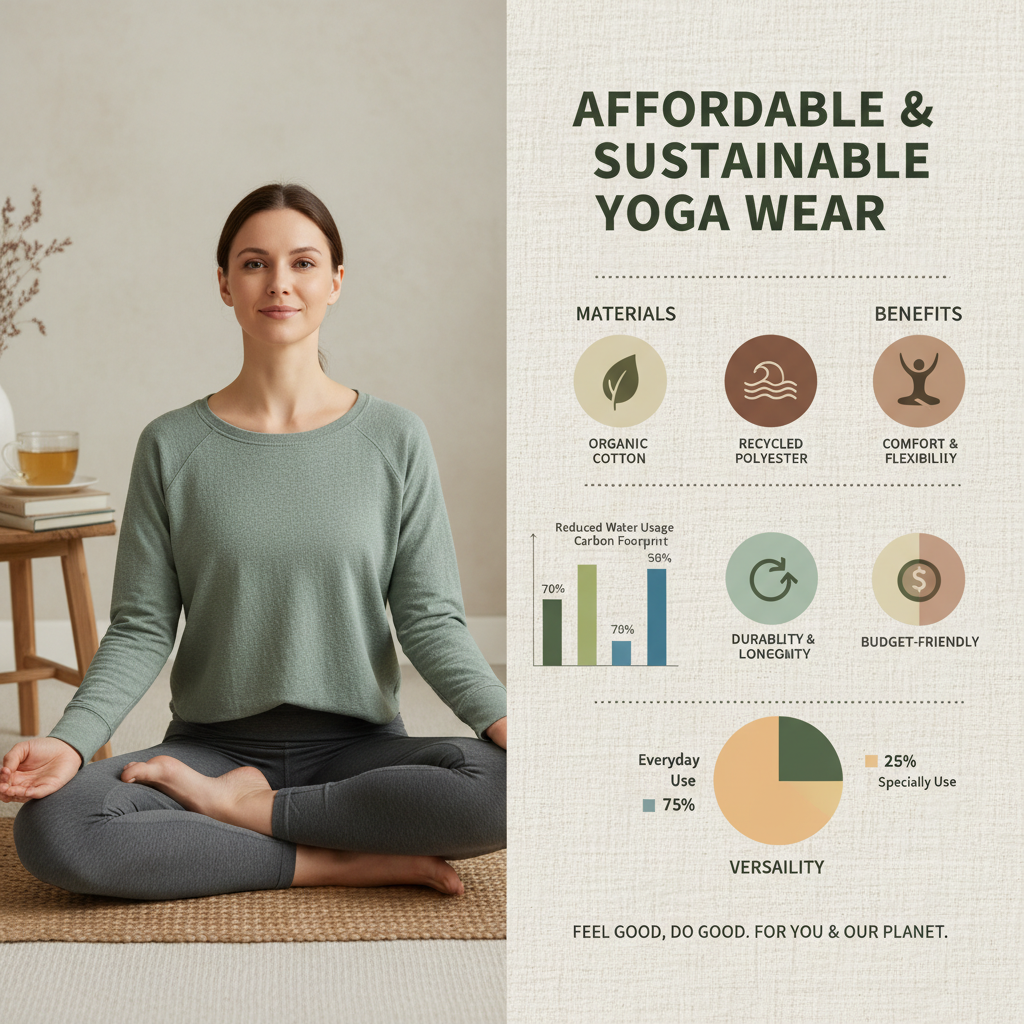
The global shift toward conscious consumerism has transformed the activewear market, placing a significant emphasis on affordable sustainable yoga clothes. As more practitioners seek a balance between spiritual wellness and environmental responsibility, the demand for gear that doesn't compromise the planet or the wallet has surged. Understanding this intersection is crucial for consumers and manufacturers alike to reduce the textile industry's carbon footprint.
Historically, "sustainable" was often synonymous with "luxury," creating a barrier for the average gym-goer or yoga enthusiast. However, innovations in textile engineering and circular economy models are now making eco-friendly fabrics accessible to a wider demographic. By integrating recycled polymers and organic fibers, the industry is proving that high-performance athletic wear can be both ethical and budget-friendly.
Choosing affordable sustainable yoga clothes is more than a fashion statement; it is a commitment to a healthier global ecosystem. From reducing microplastic pollution in our oceans to ensuring fair labor practices in garment factories, the ripple effect of these purchasing decisions helps drive the entire manufacturing sector toward a more regenerative future.
The Global Impact of Sustainable Activewear
The textile industry is one of the world's largest polluters, often cited by environmental agencies for its immense water consumption and chemical runoff. The rise of affordable sustainable yoga clothes serves as a critical intervention, moving away from "fast fashion" cycles that lead to millions of tons of landfill waste annually. By adopting biodegradable materials and closed-loop production, the industry can significantly lower its ecological debt.
Globally, the shift toward ethical manufacturing is supported by ISO standards and UN Sustainable Development Goals, which emphasize responsible consumption. When consumers prioritize budget-friendly yet green options, they force a systemic change in how yoga apparel is sourced and sewn, ensuring that environmental stewardship becomes a standard rather than a premium feature.
Defining Affordability in Eco-Friendly Yoga Gear
Affordability in the context of sustainable yoga apparel does not simply mean a low price tag; it refers to the "cost-per-wear" ratio. True affordable sustainable yoga clothes are those that combine a fair initial purchase price with exceptional durability, reducing the need for frequent replacements. This holistic approach to value shifts the focus from disposable consumption to long-term investment.
From a manufacturing perspective, affordability is achieved through scalability and the optimization of supply chains. By sourcing recycled ocean plastics (rPET) or organic cotton in bulk and utilizing energy-efficient knitting technologies, brands can lower production costs without sacrificing the ethical integrity of the garment. This democratization of sustainable fashion allows people of all income levels to participate in the green movement.
Furthermore, the connection to humanitarian needs is evident in the move toward fair-trade certifications. Affordable sustainability ensures that the cost reduction does not come at the expense of the garment worker's dignity or safety. An affordable piece of yoga wear is only truly sustainable if it supports a living wage and safe working conditions across the entire global supply chain.
Core Components of Sustainable Fabric Engineering
The foundation of affordable sustainable yoga clothes lies in material innovation. Recycled nylon and polyester are leading the charge, transforming waste into high-performance textiles that offer the same compression and moisture-wicking properties as virgin synthetics. These materials significantly reduce the reliance on petroleum-based resources.
Durability is the second core pillar. By utilizing reinforced stitching and high-density weaves, sustainable yoga gear can withstand hundreds of wash cycles without losing shape. This longevity is what makes the apparel truly affordable over time, as it prevents the constant cycle of buying and discarding low-quality leggings.
Lastly, non-toxic dyeing processes are essential. Traditional textile dyeing is notorious for polluting waterways with heavy metals. The shift toward waterless dyeing and natural, plant-based pigments ensures that the production of affordable sustainable yoga clothes does not poison the very environments that yoga practitioners seek to connect with during their practice.
Practical Applications Across Wellness Sectors
The application of affordable sustainable yoga clothes extends beyond individual studio sessions. In large-scale wellness retreats and corporate health programs, providing eco-friendly apparel helps organizations align their operational practices with their wellness philosophies. For instance, wellness centers in Europe and North America are increasingly partnering with sustainable manufacturers to offer branded gear that reflects a commitment to planetary health.
In more challenging environments, such as remote community health initiatives or outdoor fitness camps, the resilience of these materials is put to the test. Sustainable fabrics often outperform traditional ones in UV resistance and breathability, making them ideal for outdoor wear and sportwear categories where exposure to the elements is constant.
Comparative Performance of Sustainable Yoga Fabric Methods
Long-Term Value and Social Impact
Investing in affordable sustainable yoga clothes yields tangible economic and emotional benefits. Logically, the reduction in replacement frequency lowers the lifetime cost of a wardrobe. Emotionally, consumers experience a sense of alignment and peace knowing their clothing choices do not contribute to the exploitation of workers or the destruction of natural habitats.
Beyond the individual, the social impact is seen in the promotion of "slow fashion." By valuing quality over quantity, the industry encourages a culture of care and repair. This shift fosters trust between the brand and the consumer, as transparency regarding material sourcing and labor costs becomes the primary driver of brand loyalty rather than aggressive seasonal marketing.
Innovations Shaping the Future of Yoga Wear
The future of affordable sustainable yoga clothes is being driven by biotechnology. We are seeing the emergence of lab-grown leather and mushroom-based textiles that offer the flexibility required for yoga while being completely compostable. These innovations promise a future where clothes can be returned to the earth at the end of their life cycle.
Digital transformation is also playing a key role. 3D knitting technology allows for "zero-waste" manufacturing, where garments are created in a single piece, eliminating the fabric scraps typically found in traditional cut-and-sew methods. This not only reduces waste but also lowers the cost of production, further increasing the affordability of sustainable options.
Additionally, the integration of smart textiles—fabrics that can monitor heart rate or posture—is being merged with sustainable materials. This convergence of health tech and eco-consciousness ensures that the next generation of yoga wear is not only good for the planet but also actively improves the practitioner's physical wellbeing.
Overcoming Barriers to Sustainable Adoption
Despite the progress, several challenges remain in the widespread adoption of affordable sustainable yoga clothes. The most prominent is "greenwashing," where brands claim sustainability without third-party certification. This creates consumer confusion and distrust, making it harder for truly ethical brands to compete.
Another limitation is the initial cost of transitioning a factory to green energy and non-toxic dyes. Small-scale manufacturers often struggle with the capital investment required to implement closed-loop water systems. However, through government subsidies and collaborative industry cooperatives, these barriers are gradually being dismantled.
The solution lies in radical transparency. By providing "impact reports" for every garment—detailing water usage, carbon emissions, and labor wages—brands can prove their value proposition. Education is the ultimate tool; when consumers understand the difference between a "cheap" garment and an "affordable sustainable" one, the market will naturally tilt toward the latter.
Analysis of Sustainable Material Efficiency for Yoga Wear
|
Material Type
|
Eco-Score (1-10)
|
Durability Rating
|
Price Accessibility
|
| Recycled Polyester |
8 |
High |
Excellent |
| Organic Cotton |
9 |
Medium |
Good |
| Tencel Lyocell |
10 |
High |
Moderate |
| Recycled Nylon |
7 |
Very High |
Good |
| Bamboo Viscose |
6 |
Medium |
Excellent |
| Hemp Blends |
10 |
Extreme |
Moderate |
FAQS
Yes, in many cases they are more durable. By focusing on high-quality recycled fibers and reinforced construction, sustainable brands prioritize longevity over trend-driven design. This means they often resist pilling and stretching better than conventional "fast-fashion" activewear, providing better long-term value.
Look for third-party certifications such as GOTS (Global Organic Textile Standard), OEKO-TEX, or Fair Trade. A truly sustainable brand will provide a detailed breakdown of their supply chain and material sourcing rather than using vague terms like "eco-friendly" or "natural" without evidence.
Modern textile engineering has made recycled nylon and polyester virtually indistinguishable from virgin fabrics. They offer the same four-way stretch, moisture-wicking capabilities, and softness. Some plant-based options like Tencel may even feel cooler and softer than traditional synthetics.
The difference often stems from fair wages and eco-friendly processing. Traditional gear may be cheaper because of externalized costs—such as environmental pollution or underpaid labor. Sustainable gear internalizes these costs to ensure the planet and the workers are protected, though scalability is now bringing these prices down.
To maintain the integrity of eco-fibers, wash your gear in cold water and avoid using harsh chemical detergents. Air drying is highly recommended, as high heat from dryers can break down recycled elastic fibers and release microplastics into the air.
Absolutely. Many brands now offer "essential" lines made from rPET or organic cotton blends that are priced competitively. By focusing on timeless designs and buying only what you need, sustainable activewear becomes accessible to any budget.
Conclusion
The transition toward affordable sustainable yoga clothes represents a pivotal moment in the garment industry. By blending high-performance engineering with ethical sourcing and fair pricing, the market is proving that we do not have to choose between our personal wellness and the health of the planet. From the use of recycled ocean plastics to the adoption of zero-waste 3D knitting, the tools for a greener future are already here.
As we look ahead, the continued democratization of sustainable fashion will empower millions to make mindful choices without financial strain. We encourage practitioners and consumers to support transparent brands and invest in quality over quantity. For those ready to start their journey toward a more conscious wardrobe, visit our website: www.qsclothing.com