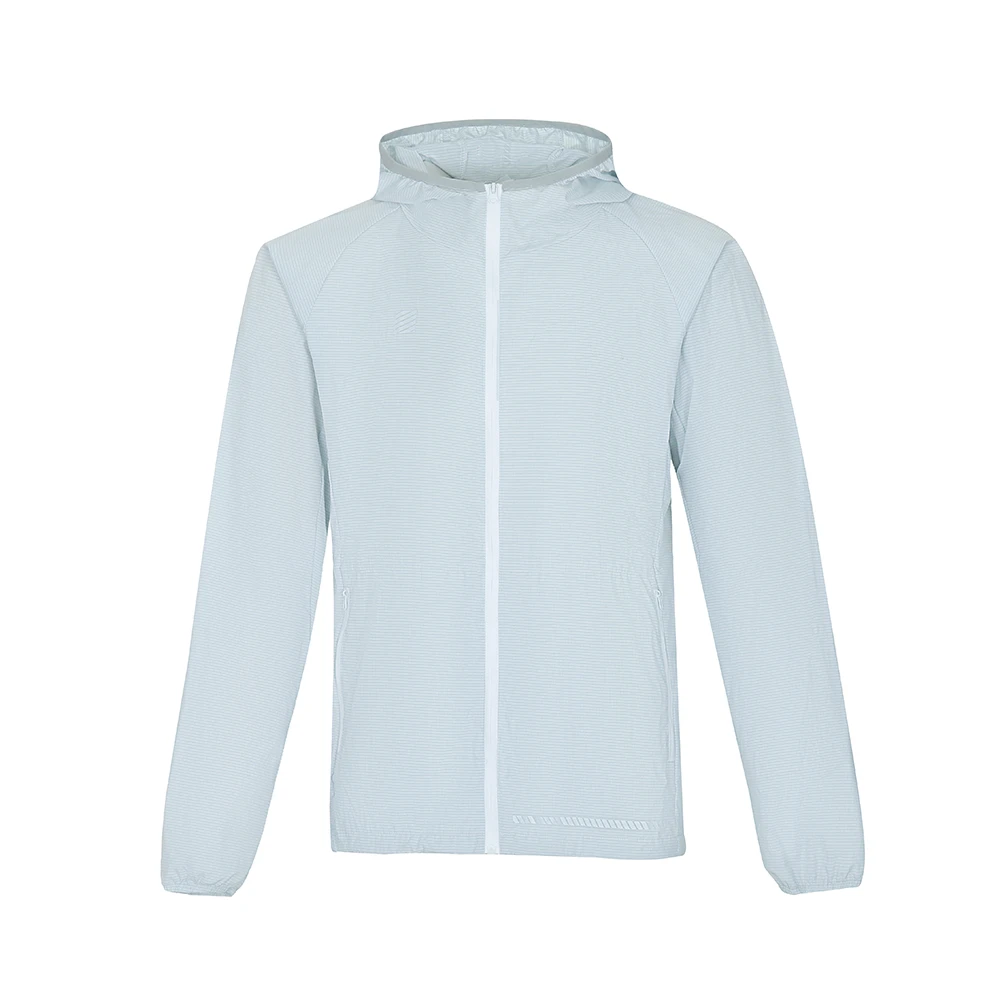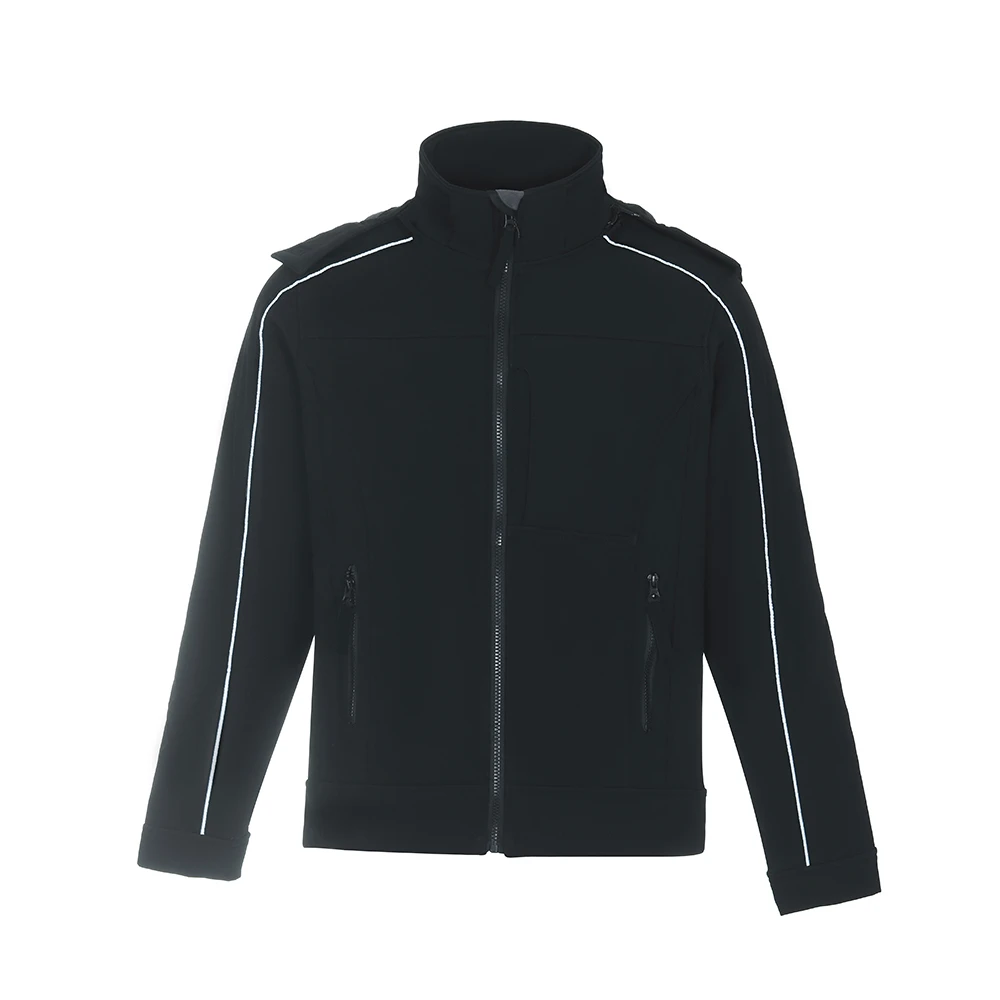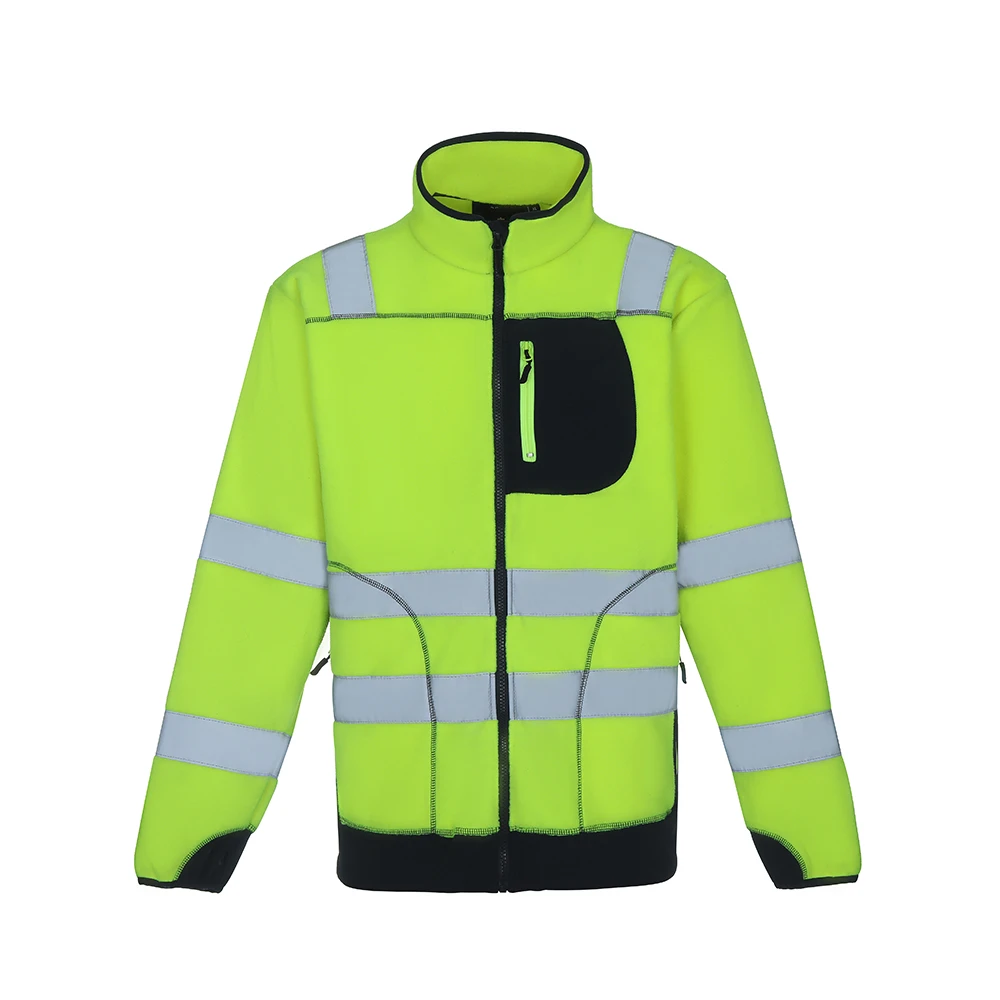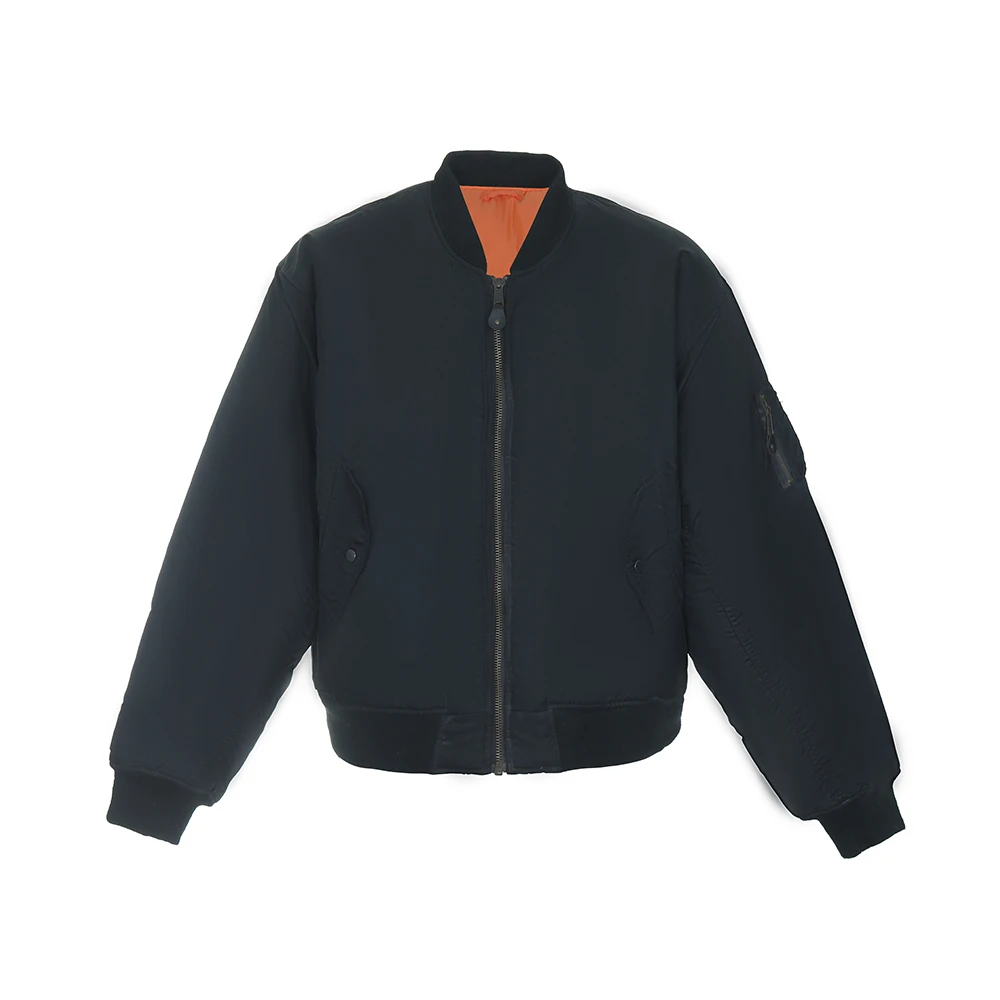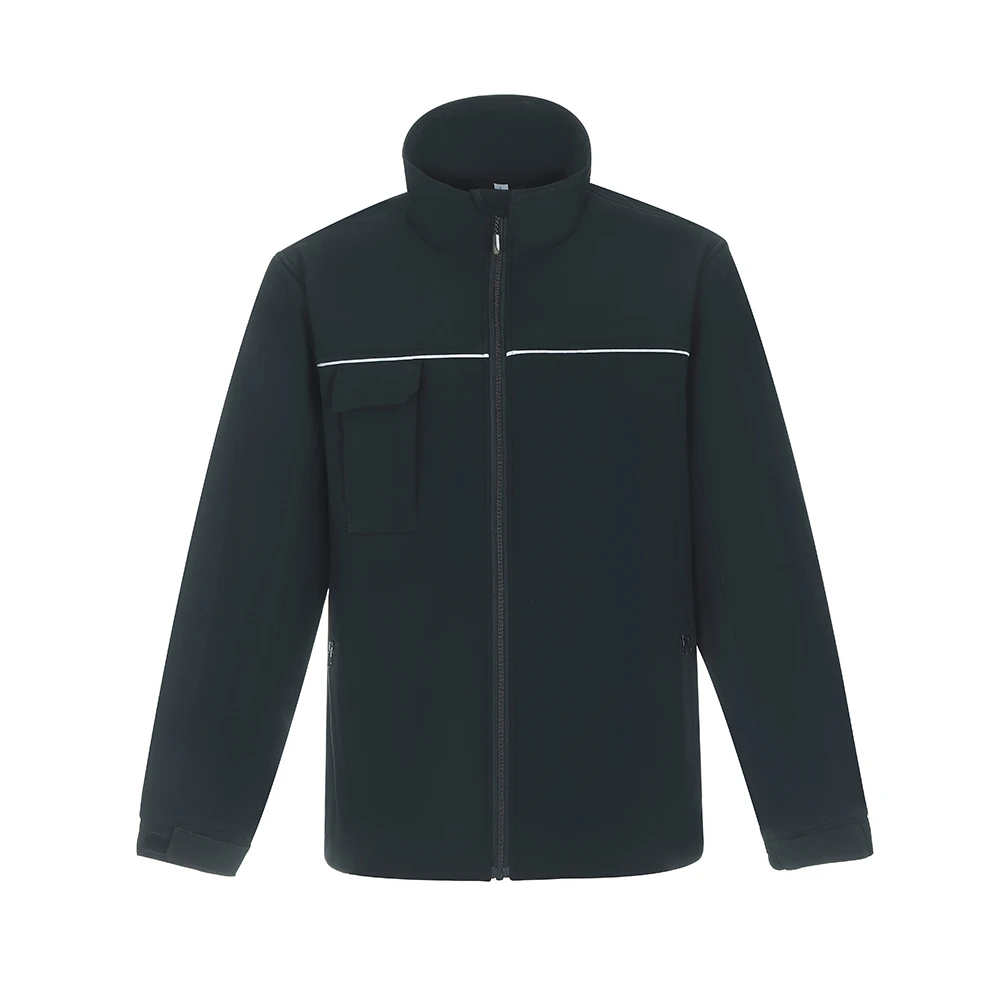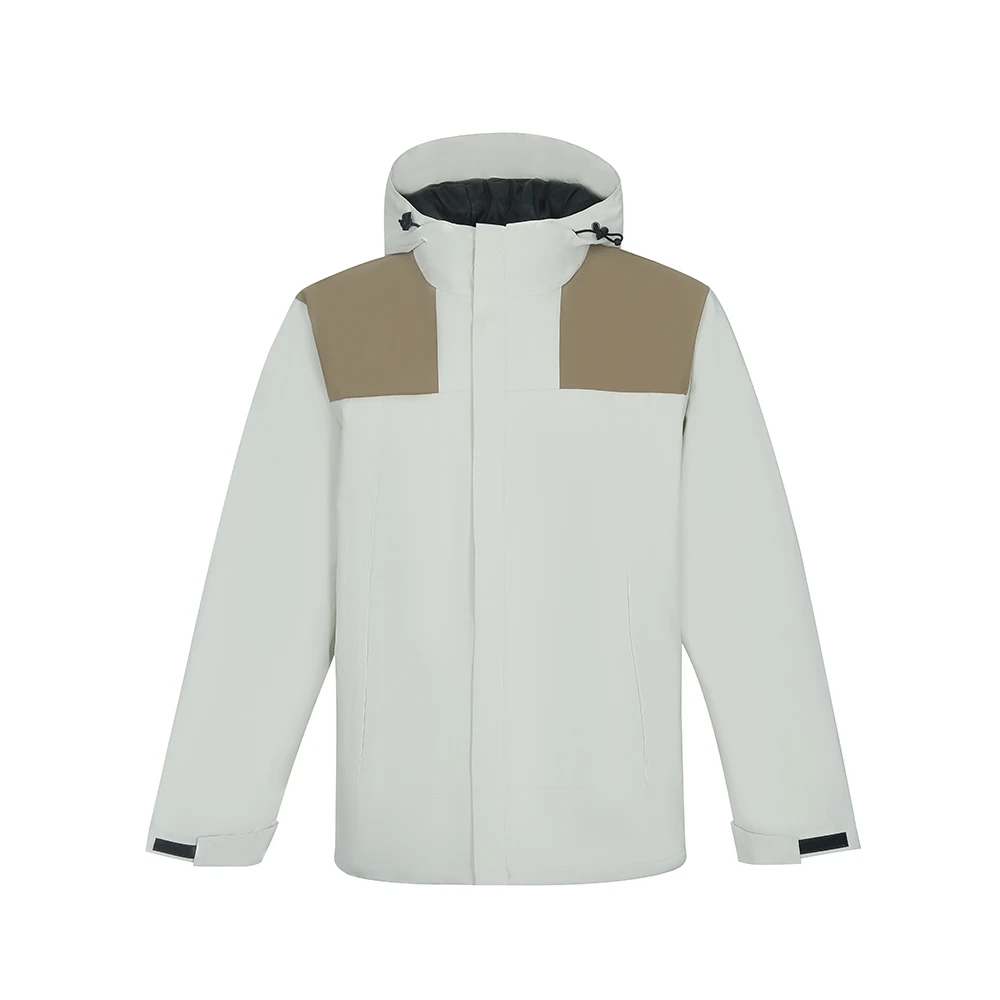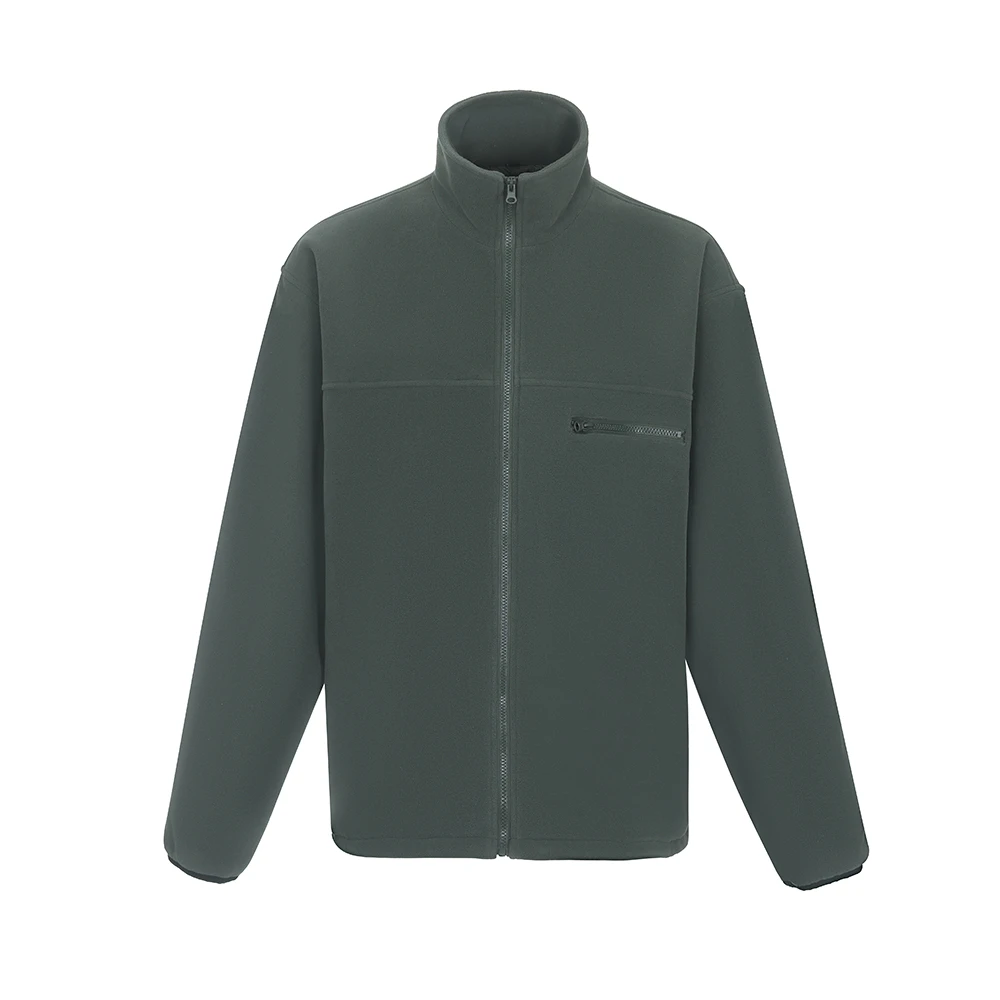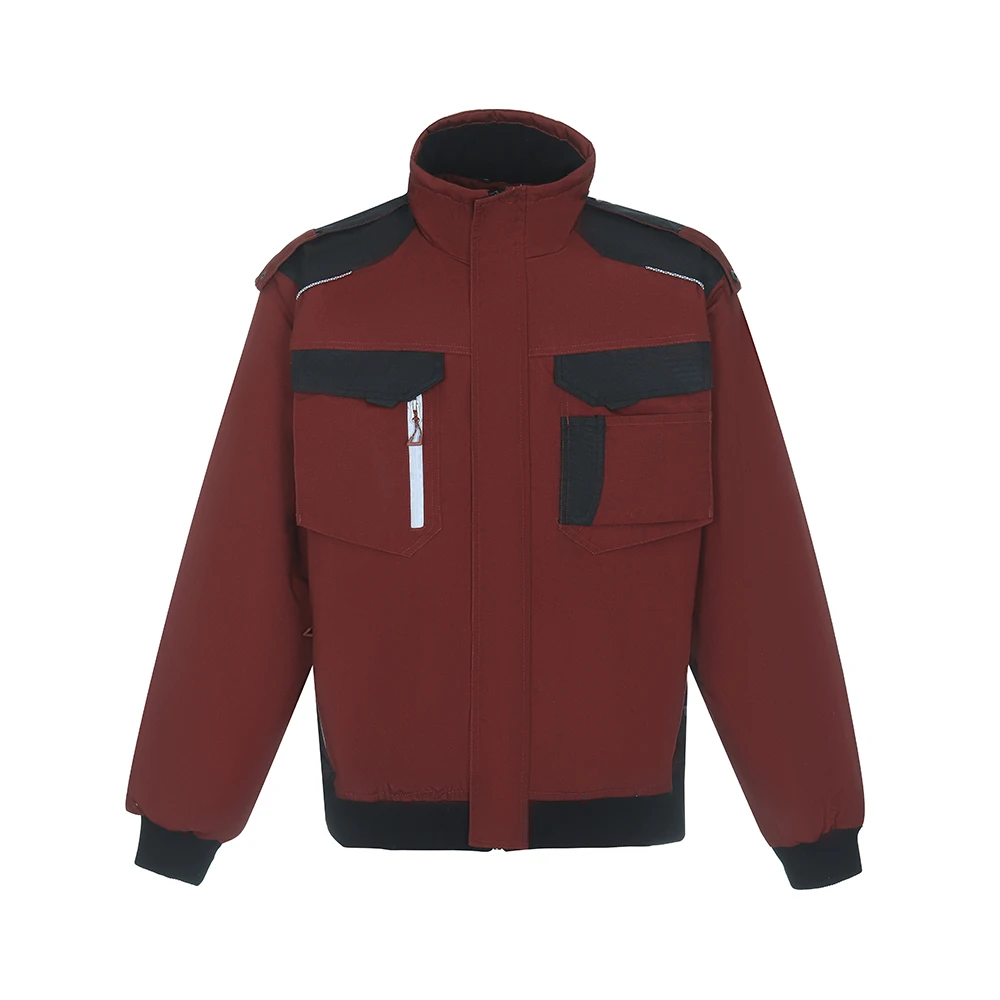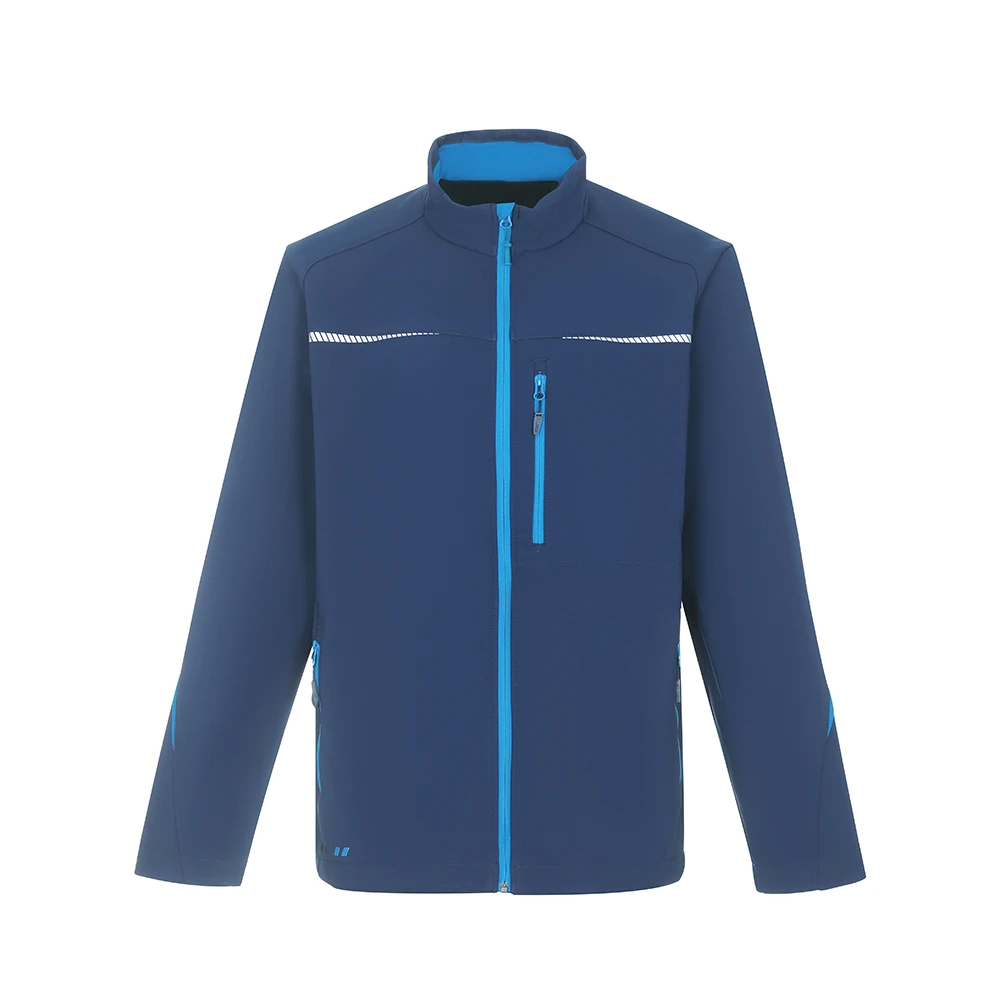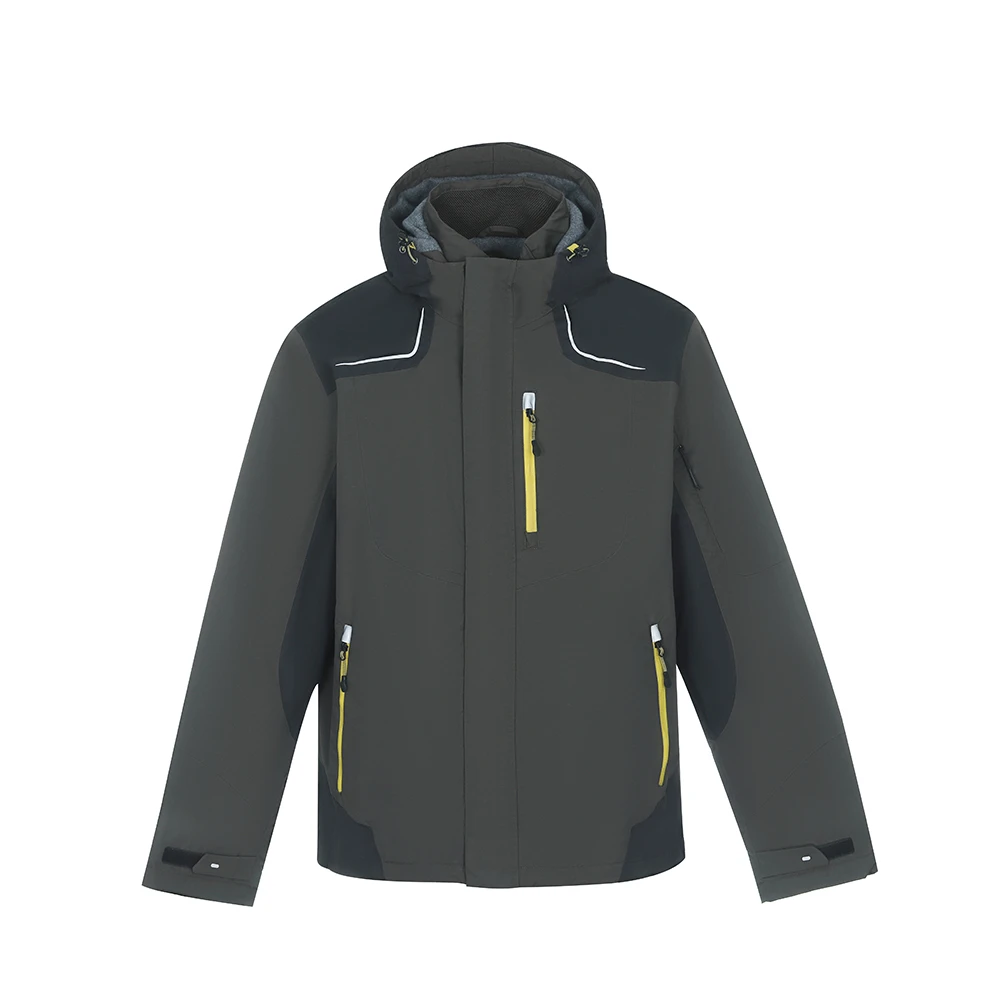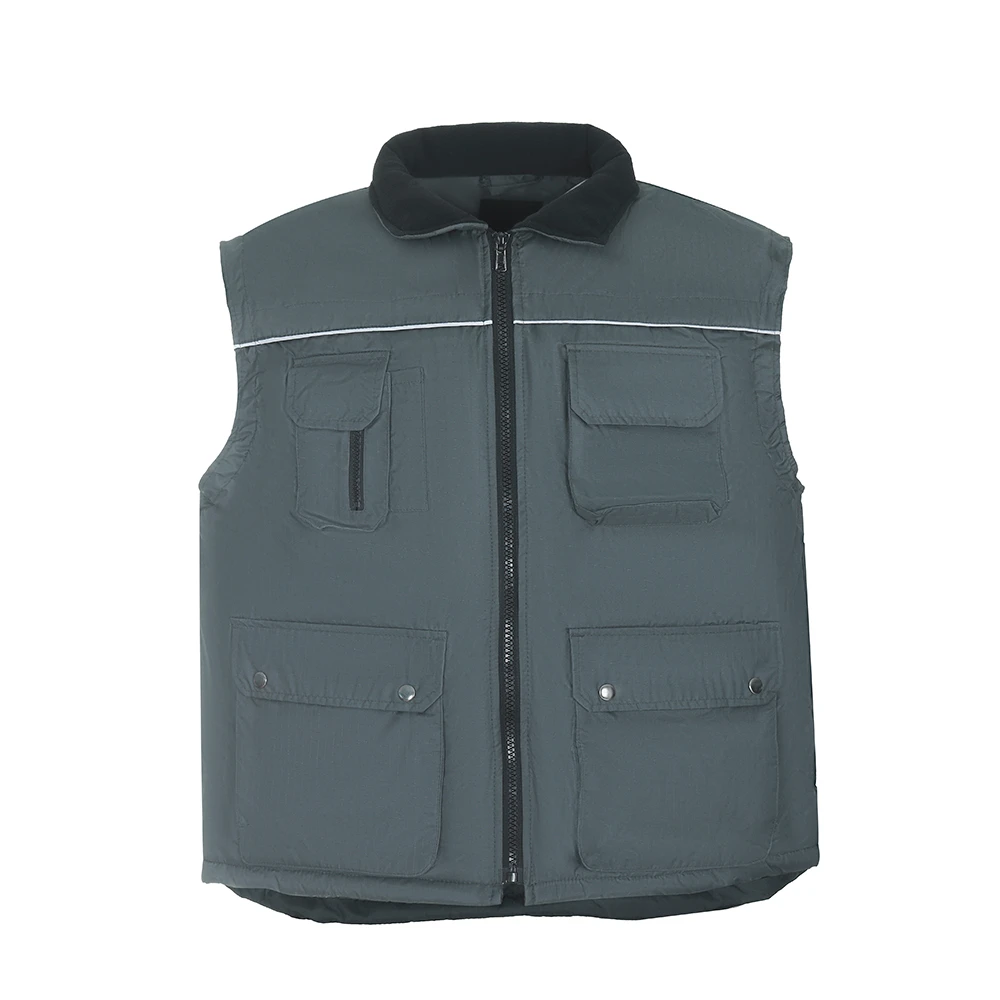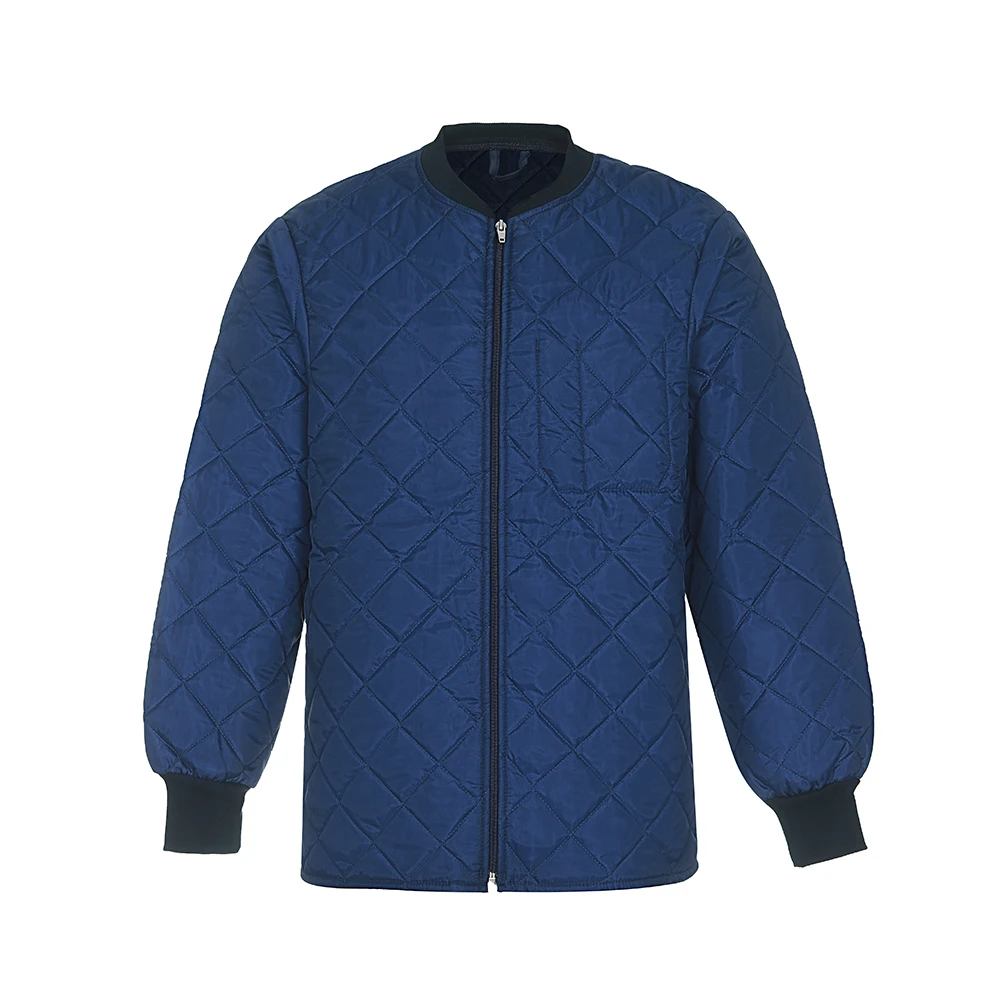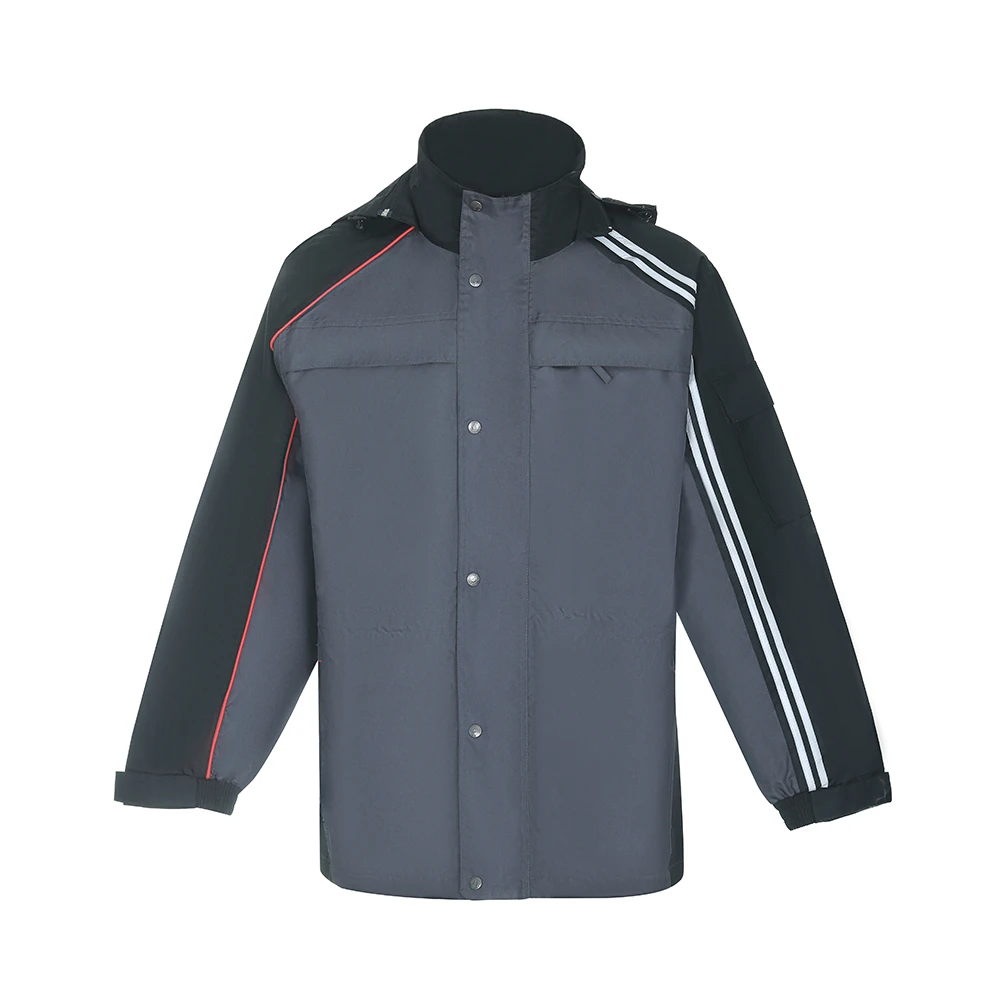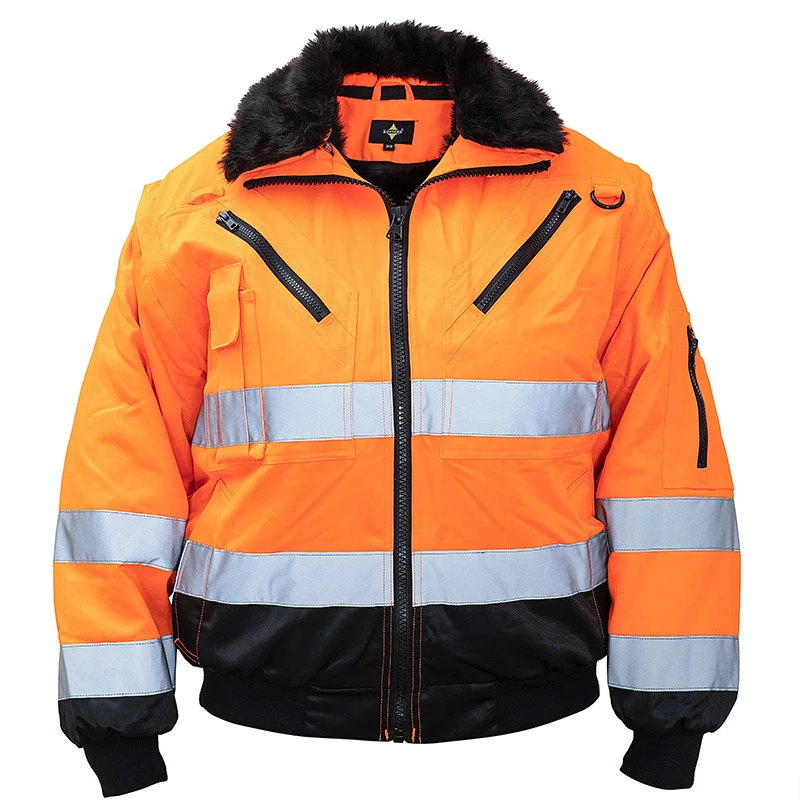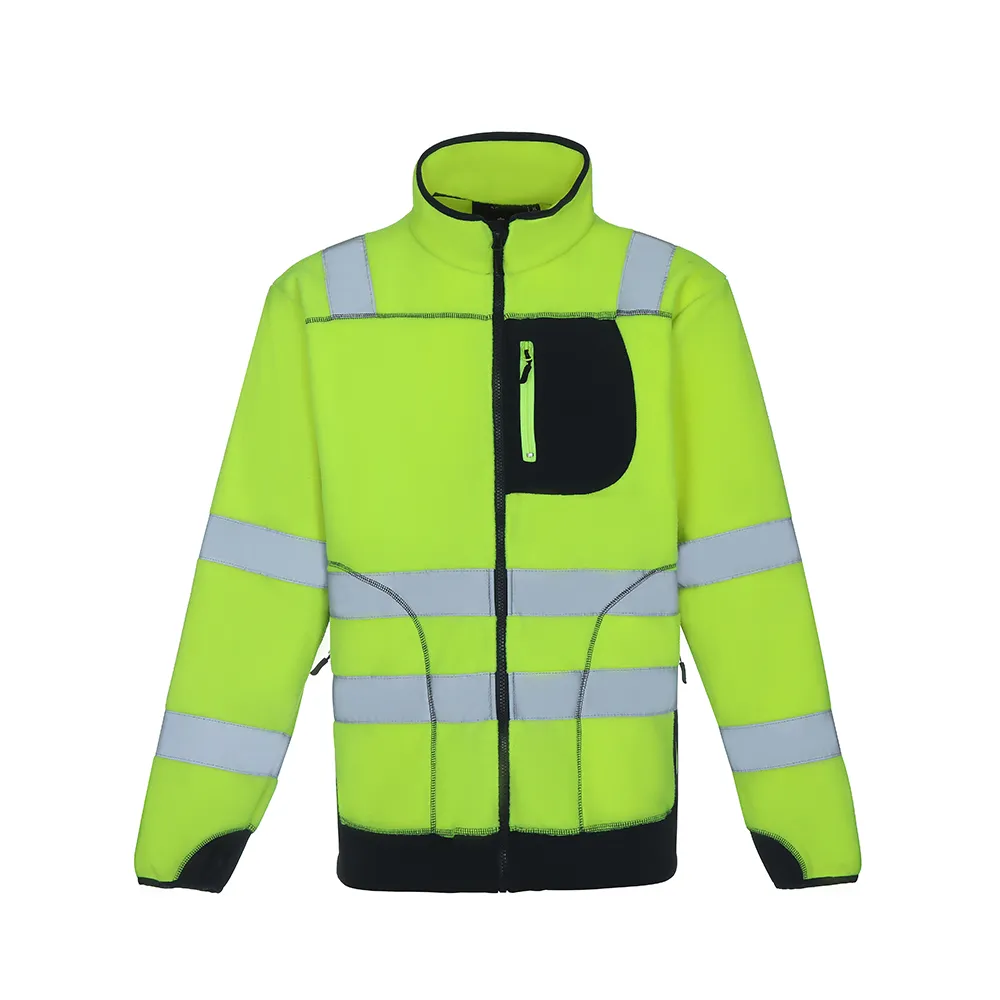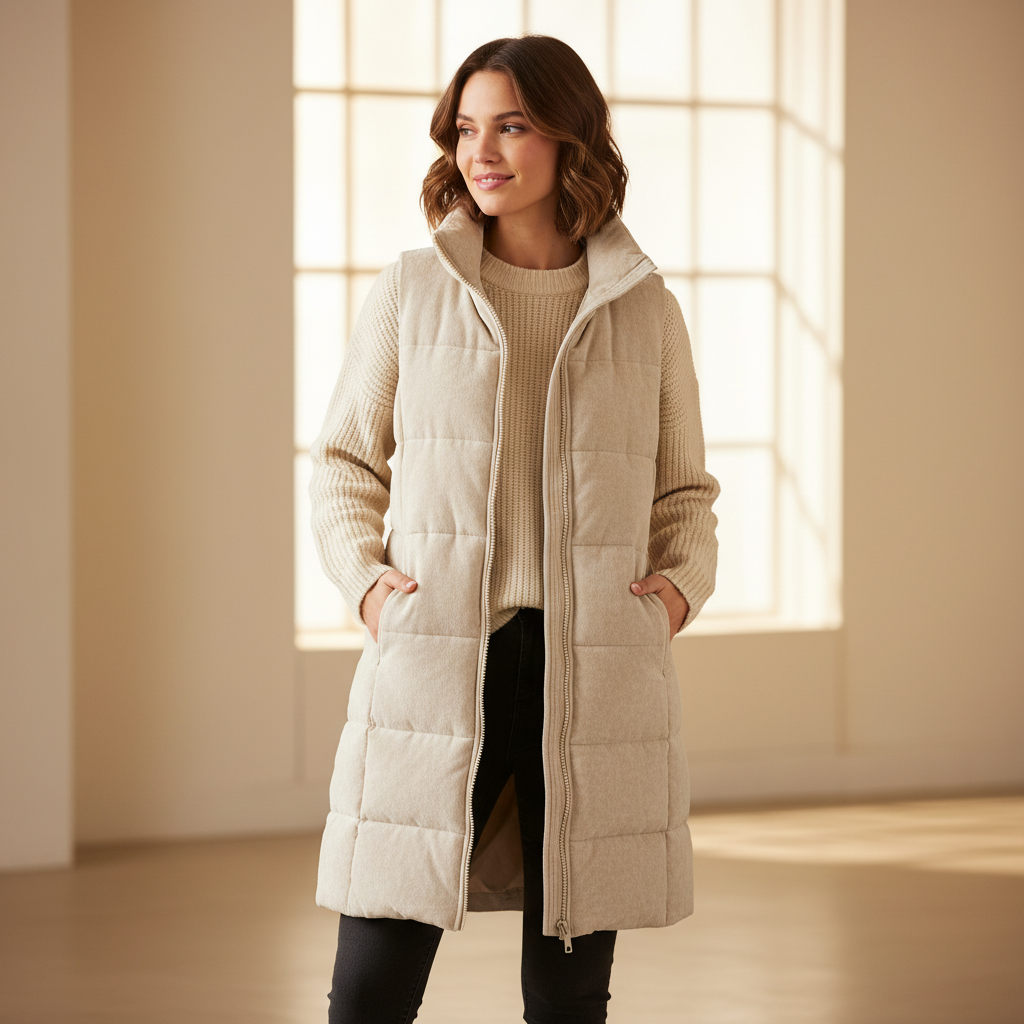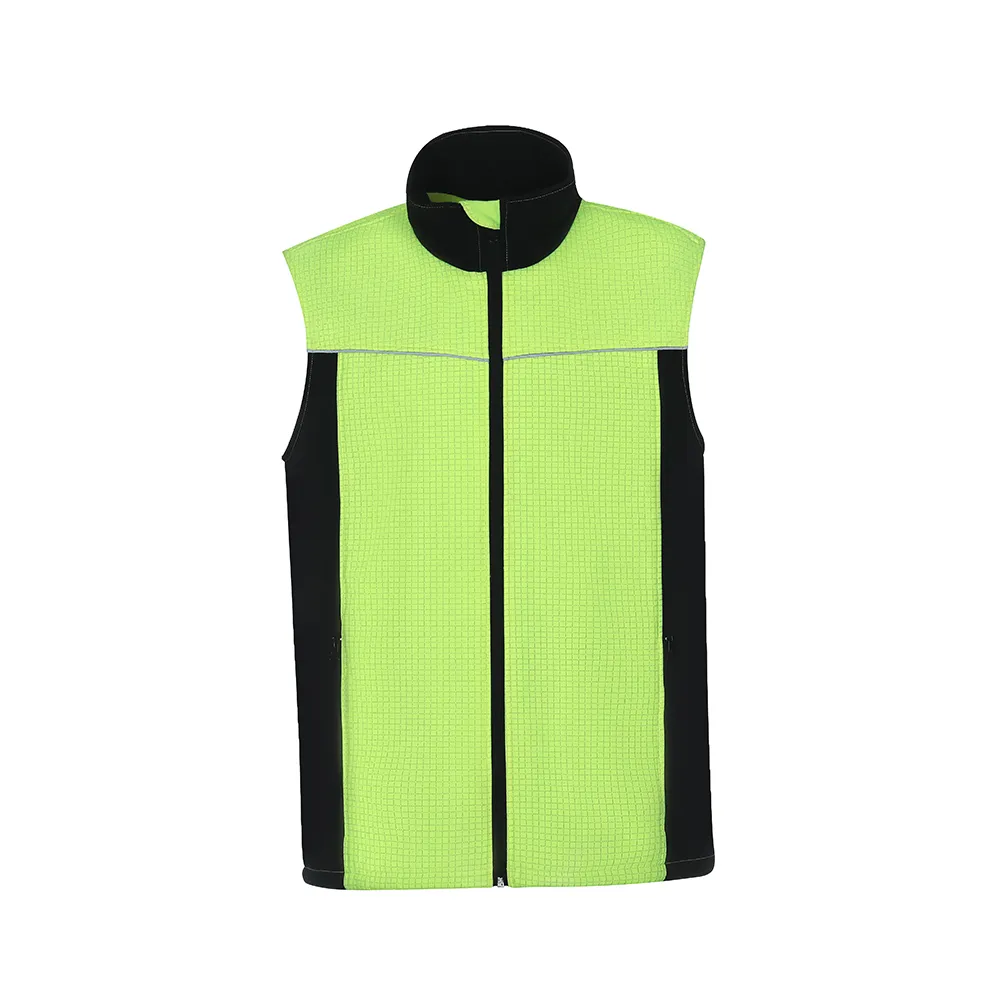
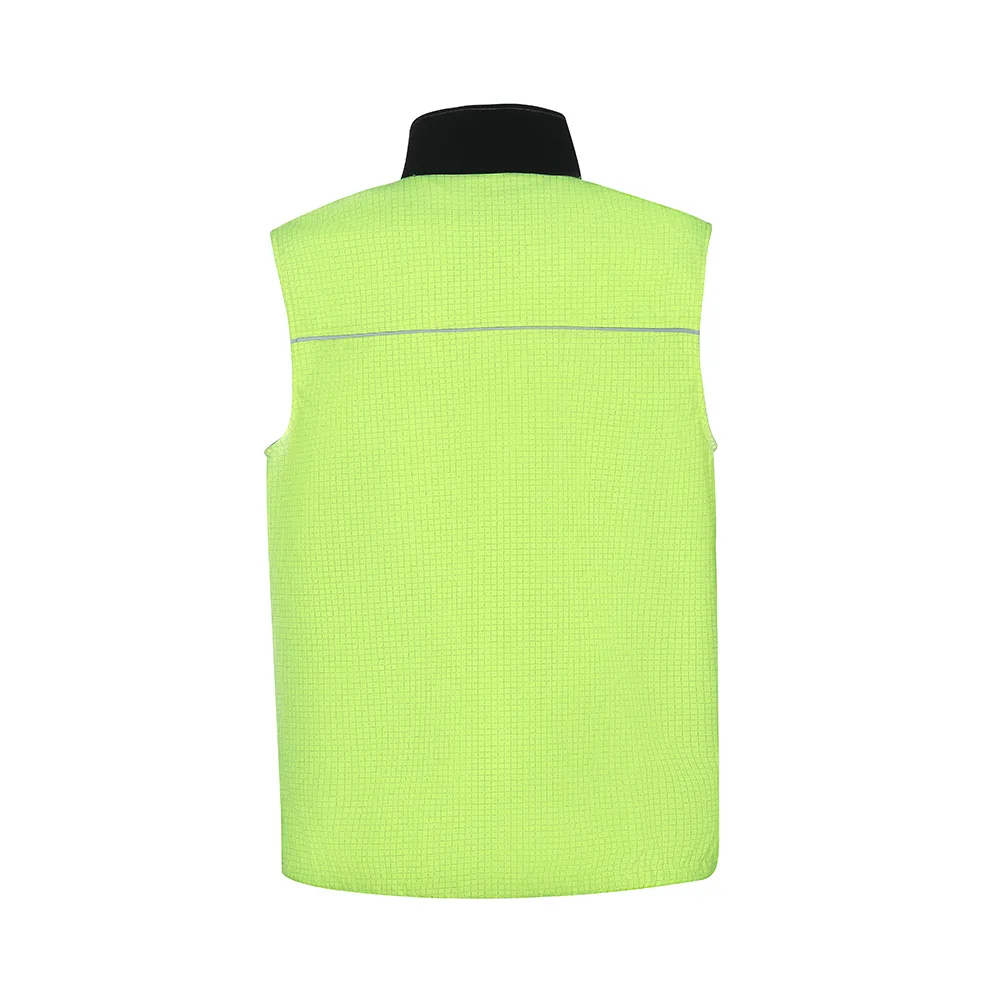
Reflex Ribstop Hi Vis Softshell Vest
Style description:
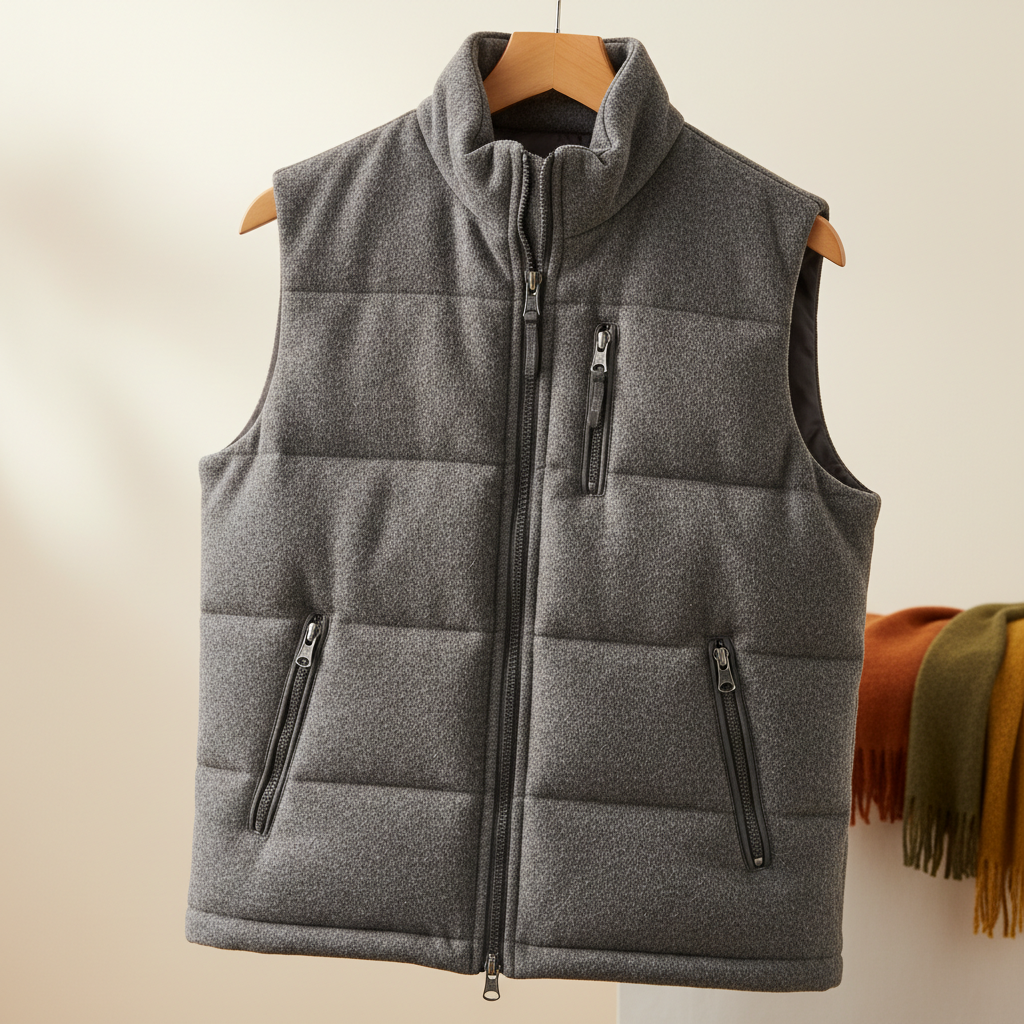
Front zipper,resin zipper;
Reflective piping on chest and back;
contrast black color fabric on the side part;
Usage scenario:
outdoor sport:
This fluorescent composite cloth vest is very suitable for outdoor activities such as running, cycling, hiking, etc. The fluorescent color design provides high visibility during the day, while the reflective teeth on the chest and back can effectively reflect light at night or in low light environments, enhancing safety.
Night work:
For people who need to work at night or in low light environments, such as traffic police, construction workers, cleaners, etc., the reflective design of this vest can significantly improve their visibility and reduce the risk of accidents.
Daily commuting:
When there is insufficient light in the morning and evening, this vest can be used as a safety equipment for commuting, especially when riding a bicycle or walking, to remind vehicles to pay attention to pedestrians or cyclists.
Team activities:
During team activities or group outdoor activities, the design of fluorescent colors can make team members easier to identify and avoid getting lost or scattered.
advantage:
High visibility:
Fluorescent colors themselves are very eye-catching during the day and suitable for outdoor use, while reflective teeth can effectively reflect light at night or in low light conditions, enhancing safety.
Security protection:
Reflective design is particularly suitable for use at night or in low light environments, effectively reminding vehicles or others to pay attention and reducing the possibility of accidents.
Color blocking design is fashionable:
The design of the black contrasting fabric on the side not only adds visual layering, but also makes the vest look more fashionable and suitable for various occasions.
Lightweight and comfortable:
Composite fabric materials are usually lightweight and suitable for long-term wear, especially during outdoor activities or work, without adding any extra burden.
Multifunctionality:
This vest can be used as functional clothing for sports or work, or as a fashionable item for daily wear, suitable for various occasions.
In short, this fluorescent composite cloth vest is not only practical but also fashionable, suitable for various scenarios, especially for people who need high visibility and safety.
Hi Vis Softshell Vest vs Traditional Hi Vis Vest
Hi Vis softshell vest and traditional hi vis vest are both widely used in safety workwear, but they serve slightly different purposes depending on working conditions. Understanding the differences helps companies and workers choose the right protective clothing for performance and comfort.
Traditional hi vis vests are usually made from lightweight mesh or polyester fabric. They are designed mainly for visibility, with fluorescent colors and reflective strips. These vests are highly breathable and suitable for hot environments or indoor warehouse work. However, they offer limited protection against wind, cold weather, or light rain.
In contrast, a hi vis softshell vest is designed as an upgraded functional version. It uses multi-layer softshell fabric that combines wind resistance, water resistance, and flexibility. This makes it more suitable for outdoor workers who face changing weather conditions, such as construction workers, road maintenance teams, and logistics staff.
Another key difference is durability. Softshell vests are more resistant to wear and tear, making them ideal for long-term industrial use. They also often include additional functional features such as zippered pockets, reinforced stitching, and ergonomic design for better movement.
Comfort is another major advantage. Traditional vests can feel loose or restrictive depending on the fit, while softshell vests provide a more tailored and flexible wearing experience.
In summary, traditional hi vis vests are best for basic visibility needs in warm environments, while hi vis softshell vests are better suited for demanding outdoor work where protection, durability, and comfort are equally important. Choosing between them depends on job requirements, climate conditions, and safety standards.
Best Hi Vis Softshell Vest for Cold Weather Work
When working in cold and windy environments, choosing the best hi vis softshell vest becomes essential for both safety and comfort. Unlike standard safety vests, softshell vests are specifically designed to provide thermal protection while maintaining high visibility.
The key advantage of a hi vis softshell vest in cold weather is its multi-layer fabric structure. Typically, it includes an outer windproof layer, a waterproof or water-resistant membrane, and a soft inner fleece lining. This combination helps trap body heat while preventing cold air from penetrating the fabric.
For workers in construction, road maintenance, or outdoor logistics, staying warm without sacrificing mobility is crucial. Softshell vests are lightweight compared to heavy jackets, allowing workers to move freely while still being protected from harsh weather conditions.
Another important factor is wind resistance. Cold weather work is often affected more by wind chill than temperature alone. A high-quality softshell vest significantly reduces wind penetration, helping maintain body temperature during long working hours outdoors.
Visibility is also maintained in winter conditions. Hi vis colors such as fluorescent yellow or orange, combined with reflective tape, ensure workers remain visible even in fog, rain, or low-light environments.
Many modern designs also include functional features such as high collars, adjustable hems, and multiple pockets for tools or communication devices, making them even more practical for field use.
In conclusion, the best hi vis softshell vest for cold weather is one that combines insulation, windproof performance, durability, and high visibility. It is an essential piece of PPE for professionals working outdoors in winter or challenging climates.
ANSI/ISEA Compliance Explained for Hi Vis Softshell Vest
ANSI/ISEA compliance is a critical standard when selecting a hi vis softshell vest, especially for workers in construction, transportation, and industrial environments. These standards ensure that safety apparel meets minimum visibility and performance requirements to protect workers in hazardous conditions.
The ANSI/ISEA 107 standard categorizes hi vis clothing into different performance classes: Class 1, Class 2, and Class 3. Each class represents a different level of visibility and risk exposure. Class 1 is suitable for low-risk environments, while Class 2 and Class 3 are required for higher-risk roadside or high-speed traffic areas.
A hi vis softshell vest designed under ANSI/ISEA standards typically includes fluorescent background material combined with reflective tape that provides 360-degree visibility. Class 3 garments, for example, require the highest level of reflective coverage, making workers visible from greater distances and in poor lighting conditions.
Compliance is not just about visibility—it also involves fabric performance. The material must maintain color brightness and reflective efficiency even after repeated washing and long-term use. This is especially important for softshell vests, which are often worn daily in outdoor environments.
In addition to ANSI standards, some regions also require EN ISO 20471 compliance, particularly in Europe. Both standards aim to ensure that workers are clearly visible in both daylight and nighttime conditions.
For companies, choosing compliant hi vis softshell vests is not only a legal requirement in many cases but also a key part of workplace safety management. Non-compliant gear can increase accident risk and may lead to regulatory penalties.
In summary, understanding ANSI/ISEA compliance helps businesses select the right hi vis softshell vest that meets safety regulations, improves worker visibility, and ensures long-term durability in demanding job environments.
Breathability vs Waterproofing in Softshell Hi Vis Vest
One of the most important performance considerations in a hi vis softshell vest is the balance between breathability and waterproofing. These two features directly affect comfort and usability in different working environments.
Breathability refers to the fabric’s ability to allow moisture vapor, such as sweat, to escape from inside the vest. A highly breathable hi vis softshell vest helps regulate body temperature during physically demanding tasks, preventing overheating and discomfort. This is especially important for workers who are constantly moving, such as warehouse staff or construction crews.
On the other hand, waterproofing or water resistance is essential for outdoor environments where rain, snow, or moisture exposure is common. Softshell vests typically use advanced membrane technology, such as TPU or PU coatings, to block water from entering while still allowing some level of airflow.
The challenge in design is achieving the right balance. A vest that is fully waterproof may reduce breathability, causing heat and moisture buildup inside. Conversely, a highly breathable vest may offer less protection in heavy rain conditions.
Modern hi vis softshell vests solve this issue by using multi-layer fabric construction. The outer layer provides wind and water resistance, while the inner layers focus on comfort and moisture management. This allows workers to stay dry from both external weather and internal perspiration.
For industries like logistics, construction, and utility maintenance, this balance is crucial. Workers often move between indoor and outdoor environments, so they need clothing that adapts quickly to changing conditions.
In conclusion, a well-designed hi vis softshell vest should provide both breathability and waterproof protection without compromising visibility or durability. The right balance ensures comfort, safety, and productivity in a wide range of working environments.
the workwear
workwear
workwear sale
Hi Vis Softshell Vest FAQs
1️⃣ What is a hi vis softshell vest?
A hi vis softshell vest is a high-visibility safety garment made from softshell fabric that combines visibility with weather protection. Unlike traditional mesh vests, it uses multi-layer materials that provide wind resistance, water resistance, and improved durability. It is commonly used in construction, roadwork, logistics, and outdoor industrial environments where both visibility and comfort are required.
2️⃣ Is a hi vis softshell vest waterproof?
Most hi vis softshell vests are water-resistant rather than fully waterproof. They typically use a DWR (Durable Water Repellent) coating or laminated membrane that prevents light rain and moisture from penetrating the fabric. However, they are not designed for heavy rain exposure like full rain jackets. Their main advantage is balancing water resistance with breathability, keeping workers dry and comfortable during light to moderate weather conditions.
3️⃣ What is the difference between a softshell vest and a regular hi vis vest?
A regular hi vis vest is usually made of lightweight mesh or polyester and focuses only on visibility. A hi vis softshell vest, however, offers additional protection such as wind resistance, mild insulation, and better durability. Softshell vests are more suitable for cold or changing weather, while traditional vests are better for hot environments where ventilation is more important.
4️⃣ Who should wear a hi vis softshell vest?
Hi vis softshell vests are ideal for workers who need both visibility and weather protection. Common users include construction workers, road maintenance crews, warehouse operators, railway staff, airport ground workers, and logistics teams. They are especially useful for people working outdoors in cold, windy, or unpredictable weather conditions where standard vests are not enough.
5️⃣ Are hi vis softshell vests compliant with safety standards?
Yes, many hi vis softshell vests are designed to meet international safety standards such as ANSI/ISEA 107 (USA) and EN ISO 20471 (Europe). These certifications ensure that the vest provides adequate visibility through fluorescent materials and reflective tape. Compliance level (Class 1, 2, or 3) depends on the amount of reflective coverage and intended work environment risk level.
6️⃣ Can you wear a hi vis softshell vest in winter?
Yes, hi vis softshell vests are widely used in winter or cold environments. Many models include fleece lining or insulation layers to retain body heat while maintaining visibility. They are often worn as part of a layering system over base clothing or sweaters, making them a flexible option for outdoor winter work.
7️⃣ How should a hi vis softshell vest be cleaned?
Most hi vis softshell vests can be machine washed on a gentle cycle using mild detergent. It is important to avoid bleach, fabric softeners, and high heat drying, as these can damage reflective tape and reduce water resistance. Always follow the manufacturer’s care instructions to maintain safety performance and extend garment lifespan.