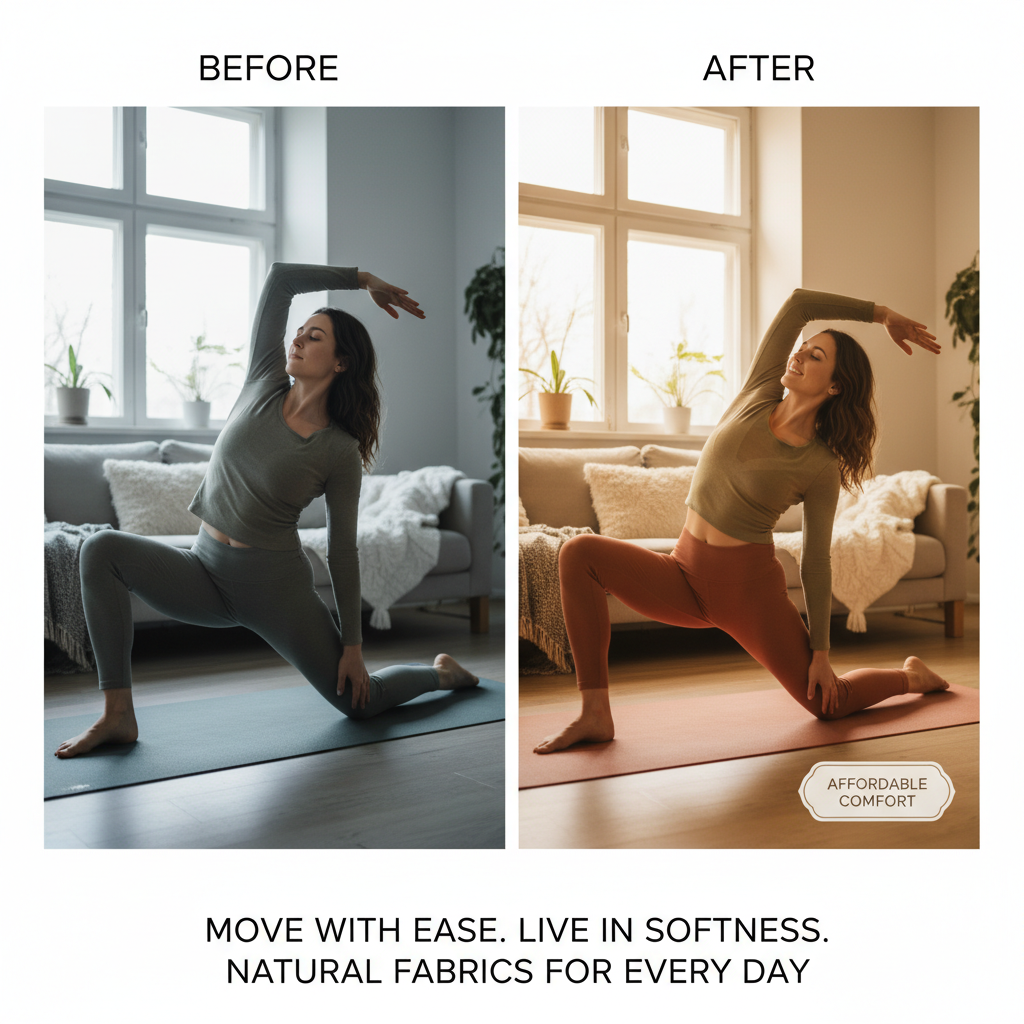
When sourcing activewear for a brand or studio, the primary friction point is often the gap between quality specifications and the actual yoga wear price. Many buyers struggle to determine if a higher cost corresponds to actual technical performance or simply brand equity.
The pricing of yoga apparel is governed by a complex intersection of textile science, manufacturing efficiency, and ethical compliance. From the denier of the spandex to the complexity of the seam construction, every technical decision impacts the final wholesale cost and the garment's lifespan.
This analysis breaks down the variables that drive costs in the professional yoga wear sector, providing a framework for buyers to evaluate value without compromising on performance or durability.


The price of yoga wear is not a static figure but a result of material inputs. High-performance activewear relies heavily on synthetic blends, primarily Nylon and Spandex (Elastane). The cost fluctuates based on the purity of the polymer and the precision of the knitting process.
For professional-grade gear, the focus is on "GSM" (Grams per Square Meter). A higher GSM typically indicates a thicker, more squat-proof fabric, which increases raw material costs but drastically improves the product's market value and durability.
Beyond raw fabric, the construction method is a critical price driver. Flatlock stitching, for instance, is the industry standard for yoga wear because it eliminates the bulky seams that cause skin irritation during deep stretches. This requires specialized machinery and more precise operator skill than standard overlock stitching.
Another factor is the application of functional finishes. Moisture-wicking treatments, antimicrobial coatings, and UV protection are chemical processes added during or after dyeing. These additions increase the per-unit cost but are essential for "hot yoga" or outdoor athletic environments where sweat management is paramount.
Precision cutting also plays a role. As garment manufacturers move toward seamless technology—where the garment is knitted in one piece—the initial machinery investment is higher, but waste is reduced. This shift changes the cost structure from labor-intensive assembly to technology-driven production.
The level of compression in a garment is determined by the ratio of spandex to nylon and the tension of the knit. Higher compression levels are often associated with "shapewear" style yoga leggings, which require higher-grade elastic fibers to maintain their shape after repeated stretching.
Value in yoga wear is found where the technical specifications—such as opacity, breathability, and elasticity—align precisely with the end-user's activity level, rather than simply paying for a premium label.
When evaluating a supplier, it is important to look at the "recovery rate" of the fabric. A low-cost garment may feel comfortable initially but lose its compression after five washes. Professional manufacturing, such as that provided by Hebei Autumn Textiles Enterprises Ltd, focuses on these long-term performance metrics to ensure product longevity.
To understand the yoga wear price landscape, one must categorize products by their technical grade. Entry-level gear uses basic polyester blends, while professional gear utilizes high-gauge nylon and seamless construction.
The following index illustrates the relationship between fabric complexity and the relative value added to the garment. This is not a market price list, but a conceptual framework for understanding where the costs are allocated during production.
For a typical boutique studio owner, the priority is often a low Minimum Order Quantity (MOQ) combined with high perceived quality. In this scenario, selecting a manufacturer that offers ODM (Original Design Manufacturing) services allows the brand to leverage existing high-quality patterns while adding custom logos.
Conversely, larger athletic brands focus on supply chain stability and certification. They require ISO9001 or BSCI compliance to ensure ethical production. When ordering in bulk, the focus shifts from per-unit cost to "total cost of ownership," including shipping, quality inspection, and lead-time reliability.
The industry is currently transitioning toward recycled polymers, such as rPET (recycled polyethylene terephthalate) and recycled nylon from fishing nets. While these materials initially commanded a premium, the scaling of production is stabilizing the cost.
Sustainable manufacturing also involves reducing water usage during the dyeing process. Digital printing is replacing traditional vat dyeing for complex patterns, reducing waste and potentially lowering the cost of small-batch custom designs.
Future pricing will likely be influenced by the "circular economy" model, where brands are responsible for the end-of-life of the garment. This may lead to a slight increase in initial production costs to ensure the fabrics are easier to recycle.
When comparing suppliers, buyers should use a weighted matrix rather than looking at the quote in isolation. A lower price often masks deficiencies in fabric recovery or stitching strength, which leads to higher return rates and brand damage.
Critical evaluation factors include the "pill resistance" of the fabric and the "colorfastness" after multiple wash cycles. These are technical benchmarks that distinguish professional sportswear from fast-fashion alternatives.
The following table provides a comparison of typical procurement tiers to help buyers align their budget with their target market performance needs.
| Tier Level | Primary Material | Construction | Target Use-Case |
|---|---|---|---|
| Entry-Level | Polyester/Spandex | Overlock Seams | Casual Leisure |
| Mid-Range | Nylon/Spandex | Flatlock Stitching | Regular Studio Use |
| Professional | High-Gauge Nylon | Seamless/Hybrid | High-Intensity Yoga |
| Premium Eco | Recycled Polymers | Precision Seamless | Eco-Conscious Luxury |
| Performance+ | Compression Blend | Reinforced Seams | Athletic Competition |
| Custom OEM | Specified Blend | Custom Pattern | Private Label Brands |
High costs are usually driven by three factors: the use of high-gauge nylon (which is more expensive than polyester), the implementation of seamless knitting technology, and the use of flatlock stitching to prevent chafing. Additionally, certified organic or recycled materials and high GSM weights for "squat-proof" opacity increase the raw material cost per garment.
GSM refers to the weight of the fabric. In yoga wear, a higher GSM typically means a denser knit, which provides better coverage (opacity) and durability. While this increases the material cost, it prevents the fabric from becoming sheer when stretched, which is a primary quality requirement for professional yoga apparel.
Yes, typically. Seamless technology requires advanced circular knitting machines that can create complex shapes without traditional seams. While it reduces labor costs for sewing and minimizes fabric waste, the initial machinery investment and technical programming are higher, which is reflected in the unit price.
Nylon is generally more expensive than polyester but is preferred for high-end yoga wear due to its superior softness, strength, and elasticity. Polyester is more cost-effective and dries faster, making it suitable for entry-level gear or specific high-sweat sports, but it lacks the premium feel of high-grade nylon.
Brands can optimize costs by choosing ODM services to utilize proven patterns, optimizing their order volumes to meet manufacturer efficiency thresholds, and focusing on a streamlined color palette to reduce dyeing setup costs. Choosing a manufacturer with a strong vertical supply chain also reduces intermediary markups.
Initially, recycled fibers were more expensive due to limited supply. However, as global production scales and technology improves, the price gap between virgin and recycled polymers is closing. In the long run, sustainability certifications may become a standard requirement, normalizing these costs across the industry.
Evaluating the yoga wear price requires a shift from looking at the total cost to analyzing the cost-per-feature. When the technical requirements—such as GSM, seam type, and fabric recovery—are aligned with the brand's market positioning, the resulting product delivers genuine value.
By partnering with experienced manufacturers who understand the balance between textile science and commercial viability, brands can create professional-grade activewear that supports the wearer's performance while maintaining a sustainable profit margin.