The global shift toward holistic wellness has catalyzed a massive surge in demand for athletic apparel that balances performance with accessibility. For many practitioners, finding affordable yoga wear is no longer just about saving money, but about democratizing health and mindfulness by removing the financial barriers to entry for high-quality gear.
In the contemporary textile landscape, the challenge lies in maintaining the structural integrity and moisture-wicking properties of professional-grade leggings and tops while optimizing manufacturing costs. The industry is currently witnessing a transition where innovative blending of recycled polymers and organic cottons allows brands to offer premium feels at a fraction of the luxury price point.
Understanding the intersection of textile engineering and market economics is essential for consumers and businesses alike. By focusing on durable, scalable, and ethically produced options, the movement toward affordable yoga wear ensures that a wider demographic can experience the physical and mental benefits of yoga without compromising on comfort or sustainability.
The Industry Context of Affordable Yoga Wear
The global athleisure market has expanded exponentially, driven by a post-pandemic emphasis on home-based fitness and flexible work-from-home wardrobes. According to recent industry analysis, the accessibility of affordable yoga wear has played a pivotal role in this expansion, allowing emerging markets in Southeast Asia and Latin America to adopt yoga practices that were previously associated with high-cost luxury brands.
From a manufacturing perspective, the shift toward cost-efficiency is not about reducing quality, but about optimizing the supply chain. By integrating vertical integration—where a single entity handles everything from yarn spinning to final stitching—manufacturers can significantly lower the retail price of yoga leggings and sports bras while maintaining ISO-certified quality standards.
Defining Value in Budget-Friendly Activewear
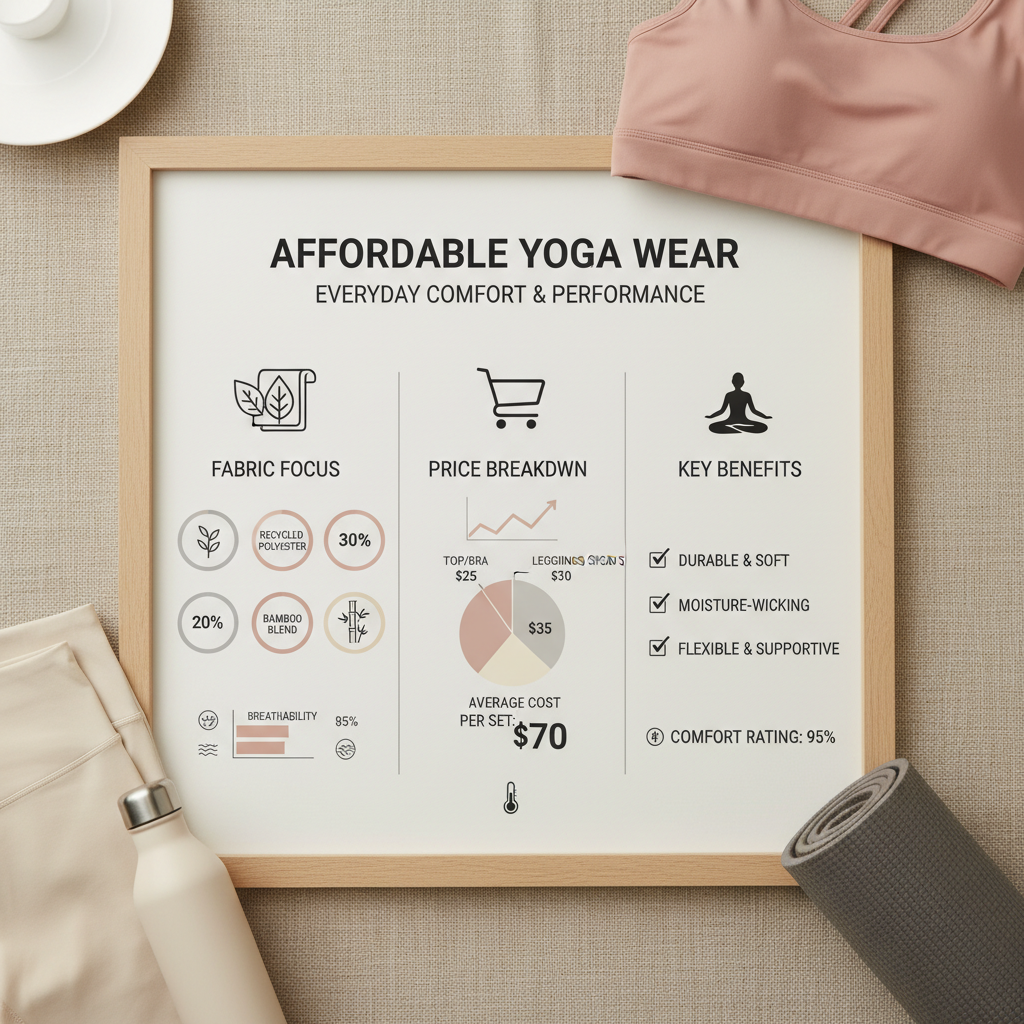
When we speak of affordable yoga wear, we are defining a category that bridges the gap between disposable "fast fashion" and overpriced luxury activewear. True value in this sector is measured by the "cost-per-wear" ratio, where the garment provides high elasticity, opacity (no "see-through" effect during squats), and durability over hundreds of wash cycles.
This definition is closely linked to the humanitarian need for inclusive wellness. By making functional gear accessible, we empower individuals from various socio-economic backgrounds to engage in physical activity. The technical focus here is on "performance democratization," ensuring that a student or a healthcare worker has access to the same moisture-wicking technology as a professional athlete.
Ultimately, affordable activewear represents a shift in consumer psychology. Modern buyers are increasingly savvy; they no longer pay for the logo, but for the fabric composition (such as Nylon-Spandex blends) and the ergonomic design that supports the body's natural movement during complex asanas.
Core Components of High-Quality Low-Cost Gear
Durability is the first pillar of affordable yoga wear. This is achieved through reinforced flatlock stitching, which prevents chafing and ensures that seams do not burst under the tension of deep stretches. By using high-gauge knitting machines, manufacturers can create a denser fabric that resists pilling and thinning over time.
Material efficiency is the second critical component. The use of "smart blends"—combining recycled polyester with a calculated percentage of elastane—allows for a compressive fit that supports muscles without restricting blood flow. This technical balance is what makes budget-friendly gear feel like a "second skin," a hallmark of high-end athletic apparel.
Finally, scalability in design ensures that affordable yoga wear remains inclusive. Implementing standardized sizing charts based on global biometric data allows brands to reduce waste and returns, passing those savings directly to the consumer while ensuring a flattering fit for diverse body types.
Global Applications and Market Use Cases
The practical application of affordable yoga wear extends beyond the studio. In corporate wellness programs across Europe and North America, companies are providing budget-friendly activewear kits to employees to encourage midday stretching and mental health breaks, proving that low-cost gear can drive large-scale behavioral change.
Furthermore, in remote industrial zones or community centers in developing regions, the introduction of durable, low-cost athletic apparel has facilitated the growth of community-led fitness initiatives. These garments serve as a tool for social empowerment, providing a sense of dignity and professionalism to practitioners who previously lacked specialized equipment.
Performance Metrics of Affordable Yoga Wear Variants
Long-Term Value and Sustainability Benefits
The long-term value of affordable yoga wear is increasingly tied to environmental stewardship. By utilizing recycled PET bottles to create polyester yarn, the industry is reducing the reliance on virgin petroleum-based plastics. This creates a logical loop where affordability is achieved through the use of diverted waste streams.
Emotionally, this shift builds a deeper bond of trust between the brand and the consumer. When a practitioner knows their leggings are both budget-friendly and eco-conscious, it enhances the spiritual alignment of their yoga practice. The reliability of the garment, combined with a clean conscience, transforms a simple purchase into a commitment to a sustainable lifestyle.
Future Trends in Textile Innovation
The future of affordable yoga wear lies in the integration of "Smart Textiles." We are seeing the early stages of conductive fibers being woven into budget-friendly fabrics, which could eventually allow leggings to track muscle activation or posture without the need for expensive external sensors.
Digital transformation in the manufacturing process, specifically 3D knitting technology, is also set to revolutionize the cost structure. By knitting a garment in one piece, brands can eliminate fabric waste entirely and remove the labor-intensive sewing process, further driving down prices while improving the seamless feel of the apparel.
Additionally, the rise of biodegradable polymers will address the "microplastic" challenge. Future affordable lines will likely transition to materials that maintain high stretch and recovery but break down naturally in compost environments, ensuring that low-cost fashion does not result in high-cost environmental damage.
Overcoming Challenges in Budget Manufacturing
One of the primary challenges in producing affordable yoga wear is the "quality-cost paradox," where reducing price often leads to a loss of opacity or elasticity. To solve this, expert manufacturers are adopting advanced fabric testing protocols, such as the Martindale Abrasion Test, to ensure that even the most affordable lines meet high durability thresholds.
Another hurdle is the ethical sourcing of materials. To combat the risks associated with low-cost production, leading manufacturers are implementing blockchain transparency, allowing consumers to trace their gear from the recycled plastic collection center to the sewing floor. This ensures that "affordable" does not mean "exploitative."
By focusing on lean manufacturing and reducing intermediary wholesalers, brands can maintain a lean overhead. This strategic approach allows for the continued production of high-performance, budget-friendly gear that supports the global wellness community without sacrificing ethical standards or material quality.
Comparative Analysis of Budget Activewear Material Standards
|
Material Type
|
Stretch Recovery
|
Moisture Wicking
|
Cost Index (1-10)
|
| Recycled Polyester |
High |
Excellent |
3 |
| Nylon-Spandex |
Very High |
Good |
5 |
| Organic Cotton |
Moderate |
Fair |
4 |
| Bamboo Viscose |
Moderate |
Good |
6 |
| Poly-Cotton Blend |
Low |
Moderate |
2 |
| Seamless Microfiber |
High |
Excellent |
7 |
FAQS
Check for two main indicators: the "squat test" for opacity and the seam construction. High-quality budget gear uses flatlock stitching (flat seams) rather than overlock stitching to prevent irritation and tăng durability. Additionally, look for a fabric blend that includes at least 10-20% Spandex or Elastane for proper shape retention.
Yes, modern rPET (recycled polyethylene terephthalate) is chemically identical to virgin polyester. In many cases, the mechanical recycling process produces a fiber with similar tensile strength and moisture-wicking capabilities, meaning your affordable yoga wear can be both eco-friendly and long-lasting without sacrificing performance.
Opacity is usually a result of fabric "gauge" or density. Lower-end manufacturers may use a lower knit density to save on raw material costs. To avoid this, look for "interlock knit" fabrics in affordable yoga wear, as this weaving method creates a double-layered effect that ensures the garment remains opaque even when stretched.
Avoid the dryer at all costs, as high heat breaks down the elastane fibers that give your gear its stretch. Wash in cold water on a gentle cycle and air dry. This simple change can extend the life of affordable yoga wear by several years, significantly reducing the cost-per-wear.
It depends on your goal. Bamboo blends are generally softer and more breathable, making them ideal for Yin yoga or lounging. However, for high-intensity vinyasa or hot yoga, synthetic blends (Nylon/Polyester) are superior because they wick sweat away from the skin much more efficiently than bamboo.
Absolutely. Many manufacturers offer B2B pricing for studio owners who wish to provide gear to their students. By sourcing directly from production-focused companies, you can secure high-performance sets at wholesale rates, making wellness more accessible for your entire community.
Conclusion
The evolution of affordable yoga wear represents a significant victory for inclusive health and sustainable textile manufacturing. By combining vertical supply chain optimization with innovative recycled materials and rigorous quality control, the industry has proven that performance and accessibility are not mutually exclusive. From the technical precision of flatlock seams to the environmental benefits of rPET fabrics, the focus has shifted toward creating value that empowers the wearer both physically and ethically.
Looking forward, the continued integration of smart textiles and 3D knitting will likely further lower costs while increasing the functional capabilities of athletic apparel. We encourage practitioners and business owners to prioritize "value-driven" purchasing—focusing on material composition and ethical production over brand prestige. To explore the best in performance and price, visit our website: www.qsclothing.com.