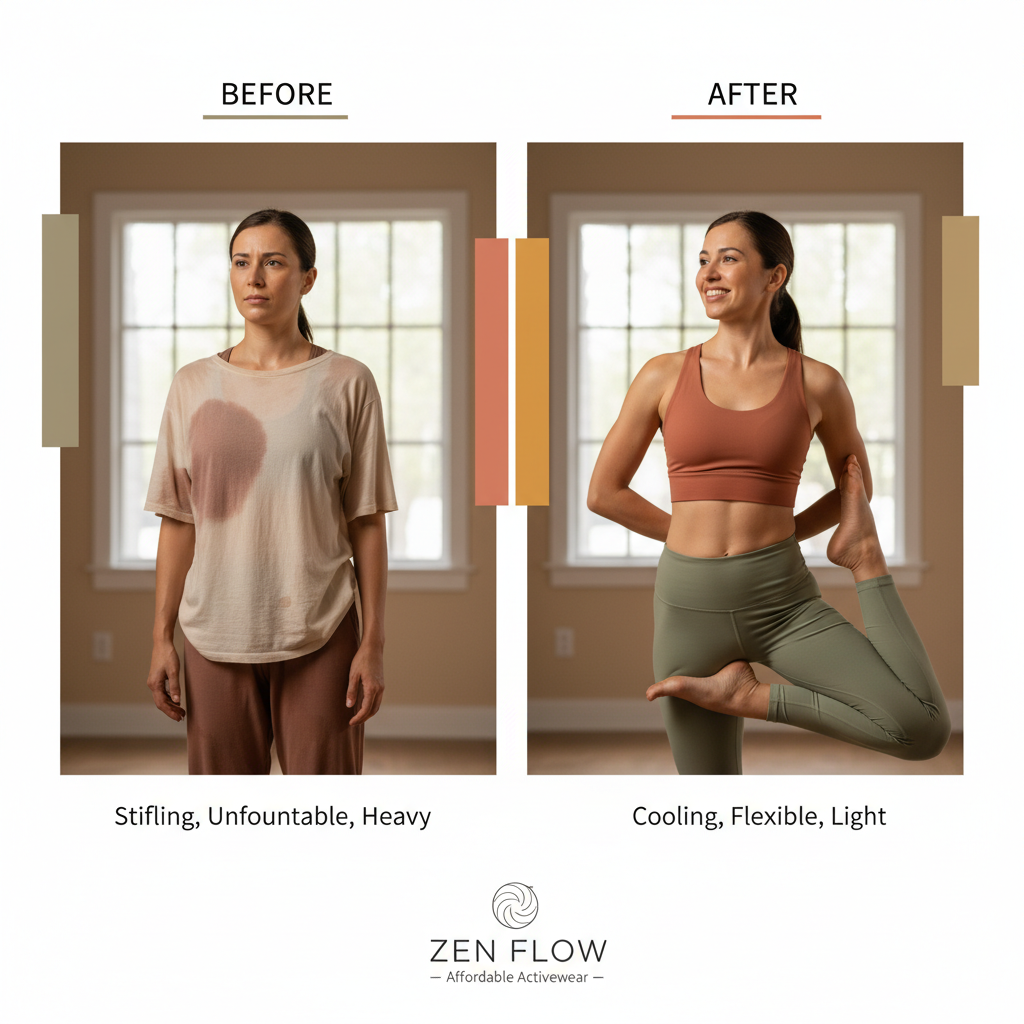
Finding reasonably priced yoga clothes often feels like a compromise between affordability and the technical performance required for a rigorous practice. In the modern textile landscape, high-quality activewear is no longer exclusive to luxury brands, as manufacturing innovations have made professional-grade fabrics accessible to a wider audience.
For many practitioners, the struggle lies in identifying garments that offer a "squat-proof" experience and moisture-management properties without the exorbitant price tags associated with boutique labels. The challenge is to find a balance where durability and comfort intersect with a sustainable budget.
This guide analyzes the essential criteria for selecting high-value yoga attire, examining fabric technologies, cost-to-performance ratios, and how to identify a reliable manufacturer. By the end of this article, you will have a clear framework for sourcing activewear that supports your movement without overextending your finances.

1Defining Value in Budget Yoga Wear

Reasonably priced yoga clothes are not simply the cheapest options available on the market; rather, they represent the optimal intersection of cost and utility. In the textile industry, this is achieved through streamlined production and the use of high-efficiency synthetic blends that mimic the properties of expensive luxury fabrics. True value is found when a garment maintains its shape and elasticity over dozens of wash cycles while providing the necessary compression for athletic support.
The emergence of direct-to-consumer manufacturing has significantly lowered the barrier to entry for high-performance gear. By removing middle-market distributors, companies can utilize premium yarns—such as high-gauge nylon and spandex blends—while keeping the final retail price competitive.
Understanding the difference between "cheap" and "reasonably priced" is critical. Cheap clothing often utilizes low-grade polyester that lacks breathability and tends to pill quickly. Conversely, value-driven activewear focuses on fabric density and seamless construction to ensure long-term wearability.
2Core Technical Requirements for Affordable Gear
To ensure that reasonably priced yoga clothes perform adequately, several technical benchmarks must be met. First is the opacity of the fabric, often referred to as "squat-proof" capability. This is determined by the GSM (grams per square meter) of the fabric; higher density generally prevents transparency during deep stretches, which is a common failure point in low-cost activewear.
Moisture-wicking capability is another non-negotiable feature. High-value garments use capillary action to pull sweat away from the skin to the outer surface of the fabric where it can evaporate. This prevents the "heavy" feeling of saturated cotton and reduces the risk of skin irritation during prolonged sessions.
Finally, the construction of the seams is paramount. Flatlock stitching is the gold standard for yoga wear because it eliminates the ridge where two pieces of fabric meet, thereby preventing chafing. When evaluating budget options, the presence of reinforced flatlock seams is a primary indicator of quality manufacturing.
3Common Application Scenarios and Fabric Fit
Different yoga styles demand different garment characteristics. For Hatha or Yin yoga, where movements are slow and hold times are long, a softer, more breathable fabric blend is preferred. In these scenarios, the focus is on unrestricted movement and a "second-skin" feel that doesn't distract from the meditative process.
Conversely, Vinyasa or Power Yoga requires higher compression and stability. The attire must support the muscles during rapid transitions and remain securely in place during inversions. High-compression waistbands are essential here to prevent the clothing from sliding down during downward-facing dogs or headstands.
Beyond the studio, many users seek versatility for "athleisure" use. This requires a balance of technical performance and aesthetic appeal. Fabrics with a matte finish often transition better from a workout to a casual environment while still providing the necessary elasticity for movement.
4Comparative Performance Analysis
When comparing reasonably priced yoga clothes against industry averages, the disparity often lies in the consistency of the fabric stretch. Budget options frequently exhibit "uneven tension," where the fabric stretches more in some areas than others, leading to unsightly bunching. High-value manufacturers solve this through precision knitting and rigorous tension testing.
Data indicates that when the correct synthetic blends are utilized, budget-friendly gear can match the breathability and moisture-wicking performance of premium brands. The primary difference is often found in the branding and marketing overhead rather than the physical properties of the textile itself.
reasonably priced yoga clothes Performance Metrics
The chart above demonstrates that high-value, reasonably priced options can actually exceed industry averages in durability and elasticity if they are sourced from specialized manufacturers who focus on technical apparel rather than fast-fashion outlets.
5Sourcing Strategies for Quality Procurement
For those looking to procure reasonably priced yoga clothes in bulk or for a brand, the focus should be on the supplier's certification and supply chain. ISO9001 and OEKO-TEX certifications are critical markers, ensuring that the fabrics are not only produced with consistent quality but are also free from harmful chemicals.
Evaluating a manufacturer's experience in the "Outdoor Wear" and "Sportswear" categories is also vital. Companies like Hebei Autumn Textiles Enterprises Ltd, with decades of experience in functional garments, typically have the infrastructure to produce high-performance yoga wear at a lower cost due to their integrated supply chain management.
Customization options, such as OEM and ODM services, allow buyers to specify the exact GSM and blend of the fabric. This ensures that the final product meets specific performance needs without paying for unnecessary "luxury" features that do not contribute to the garment's function.
6Industry Trends in Sustainable Activewear
The shift toward sustainability is fundamentally changing how reasonably priced yoga clothes are produced. Recycled polyester (rPET) and recycled nylon are becoming standard in value-driven lines. These materials offer the same technical performance as virgin plastics but with a lower environmental footprint.
Another emerging trend is the use of seamless knitting technology. This process reduces fabric waste during production and creates a garment with fewer seams, which further minimizes the risk of irritation and improves the overall aesthetic of the apparel.
As consumers become more conscious of "fast fashion," the industry is moving toward "slow activewear"—garments designed for longevity. This involves using higher-density yarns and reinforced stitching, ensuring that affordable gear doesn't end up in a landfill after a few months of use.
7Decision Matrix: Budget vs. Premium Options
Choosing between different price points requires a clear understanding of the trade-offs. While premium brands offer prestige and often cutting-edge research in fabric science, the "performance gap" has narrowed significantly. For 90% of yoga practitioners, high-value budget gear provides all the necessary functional benefits.
The key is to identify where a premium price is actually providing a technical advantage (such as specialized compression zones) versus where you are simply paying for the logo. A systematic comparison helps in making an informed purchase.
| Feature | Budget/Cheap | Reasonably Priced | Ultra-Premium |
|---|---|---|---|
| Fabric Density | Low (Sheer) | Medium-High (Opaque) | High (Opaque) |
| Elasticity | Poor Recovery | Strong Recovery | Engineered Recovery |
| Seam Quality | Overlock (Rough) | Flatlock (Smooth) | Seamless/Bonded |
| Breathability | Low (Polyester) | High (Nylon Blend) | High (Proprietary) |
| Lifespan | Short (3-6 mo) | Medium (1-2 years) | Long (2+ years) |
| Value Ratio | Low | Excellent | Diminishing Returns |
Ultimately, the best choice is the one that aligns with your frequency of use and performance requirements. For most, the "Reasonably Priced" category offers the best return on investment, combining professional functionality with financial sustainability.
Frequently Asked Questions
Conclusion
Investing in reasonably priced yoga clothes does not require a sacrifice in performance or ethics. By focusing on technical specifications—such as fabric GSM, flatlock stitching, and moisture-wicking blends—practitioners can secure professional-grade gear that supports their physical journey without unnecessary financial strain.
Whether you are a casual practitioner or a professional athlete, the key to value is informed procurement. Those seeking high-quality, customizable solutions can explore the manufacturing capabilities and product ranges available at www.autumnhb.com to find the perfect balance of quality and cost.